Volunteers or staff: Who is holding up your virtual organization?

Getting the right mix of staff and volunteers for a virtual organization is a crucial task for sustainability. The key is to take limited resources (if you have unlimited resources, call me) and invest these in directions that bring the best return for all.

What are volunteers good for? Many a community organizer has had moments when the answer to this is all too clear. Thankfully, those moments do pass. Volunteers are the heart of a virtual organization. Keeping this organ alive and well is job one for staff. Volunteers bring skills, vision, energy, and passion to the organization. They tend to do so in short-term increments. They need to know their efforts are valuable. This knowledge prompts them to stay engaged. Through the serial engagement of many volunteers, certain activities are maintained: governance, oversight, incremental work on infrastructure, a supply of new ideas, and, yes, occasional sidetracks. Nobody can sell your organization to donors and new partners better than volunteers. And nobody can grow your organization over time and on budget like volunteers.

What is your staff good for? Staff are the backbone of any virtual organization. They keep it on track and guide its fortunes. They have responsibility for those tasks that volunteers should not be asked to perform (more about this soon). They also have responsibility to keep volunteers engaged. They do the thank-less work and get paid for this. But that doesn’t mean the organization doesn’t owe them a heap of thanks. Still, they are professionals, and need to step up an take charge when the need arises. Generically, the work of staff falls into two buckets: everyday necessary tasks and putting out fires. Volunteers should not be asked to perform these types of work. Staff run the events on the organization’s calendar; they manage the web-presence, the accounting, the teleconferences, and a hundred day-to-day activities. They facilitate volunteer efforts. And, when the website is hacked, or the projector bulb burns out, they fix it.

Volunteers get called in to plan and direct new activities and articulate new goals. Ideally, they are given a say (not just a voice) in the organization’s operational budget. Because they do the planning and determine the budget, it’s only fair that they do some of the work. They can be tasked to scope out any new work required by a new goal and to build new capabilities to meet this. Then they either do the work, or determine that the job is too big for them to accomplish. When the volunteers are done with their efforts, the outcomes are passed back to staff to incorporate into the organization’s operational inventory. Sometimes the outcomes are not fully ready to use (having been built by volunteers). Staff might need to hire an outside expert to polish the work. Note: this person should be fully “outside” and not a community member. Never hire a community member as a consultant to fix another community member’s volunteered contribution.

When the job is too big, volunteers might ask for some support (more often they just stop answering emails). There are many ways to support volunteers. Paying them is the least valuable, as this transforms them into non-volunteers. There are several descriptions of the negative impacts of paying volunteers. Basically you are pissing in your own soup. Other means of support are always better: find them assistants (pay for interns), pay their travel, pay for hardware and software when required, and, if nothing else works, add staff to help. Sometimes, this might mean making a skilled volunteer a “fellow” for a short period of time. This move should include a community vote, including an open call for the fellow position within the community. The community is tasked to help staff fill a temporary (less than a year) need from within their ranks. By this, the “fellow” can be paid for a time and then return to the ranks of the volunteer community.

Remember that volunteers need to know their efforts are valuable. The organization needs to build and maintain recognition systems for volunteers. These include online and in-person awards. The three motivations for engagement are money, love, and glory. When it comes to volunteers, if you are stingy with the glory, don’t expect any love. And when you let the community add to their own glory, then you can stand back and watch new leaders emerge and know your virtual organization is healthy and growing.

Image Credit: Used on CC license. Photographer: Leo Reynolds on Flickr

Unintended Consequences Mock our Best Efforts

The dog was just a puppy, and it came rocketing across the street with its tail down. The dog’s owner, rummaging in his garage, the door open, yells out to dog. It’s some kind of lab mix and it jumps up on us with joy. We are mindful of the traffic on the street, and corral the pup by its collar. The owner trots over and we pass the dog back to him.

“Is it a lab?” my wife asked.

“Some kind of mix,” he said. “I got him from a shelter. They don’t euthanize here, so we went down to Riverside where they do, and rescued him.”

My wife has volunteered for years at the local Humane Society, where they struggle to find owners for their orphaned pups and kittens. Their pledge to not euthanize was designed to reassure locals of a mutual responsibility to manage their pets. Unintentionally, the Humane Society has also “rescued” their charges from death, and by doing so has removed that action from the scope of the people who come in to find a pet.

*******************

The local blood bank in Santa Barbara ran as a non-profit organization for decades, as a vital partner in local health and medical services. One day it announced that it was selling its operation to a for-profit blood services organization that would help manage the blood supply with new organizational tools and greater funding for new technologies.

Within a month, the number of  blood donors to the blood bank fell to the point where it was in danger of failing both economically and in its roll to provide for the local demand. Soon after, the blood bank resumed its operation as a non- profit organization, and the volunteers returned.

*******************

A large, federal agency funded digital library effort struggled for years to achieve greater impact. During this time, the project was run by a funded core of organizations. They had originally drawn up a community governance plan, but this had never been implemented. A cadre of volunteers, people who shared the vision of the effort, soldiered on with committees and working groups, but nothing seemed to gel. The agency provided some additional funding for new work, and the project parceled out these funds to a handful of former volunteers. Almost immediately, the remaining volunteers stopped volunteering, and the entire effort was soon defunded. One might argue that it was not the presence of money, but the lack of community that doomed the project, however, the impact of money was immediate and damaging.

*******************

The presence of money can interrupt the work of a volunteer community in unintended ways. But these do not need to be unexpected. If money is made available, it needs to be managed by the volunteers (they need to have a say in the budget), and it needs to support their voluntary efforts, not pay them for the same work.

As for the unintended (perhaps even perverse)  impact of not euthanizing stray pets; instead of, say, holding mock executions to give people the joy of rescue, there might be opportunities to advertise the burden of maintaining these pets, and the need for them to have real homes.

Photo Credit: Stephen Poff on Flickr

Opening up the Virtual Democracy Blog

This blog has been focused on conversations about society on the web. As we spend more and more hours hooked into socially networked media feeds and opportunities to interact with others who are otherwise strangers, we need to look at the quotient of the time our own voices matter in this mix. Having a say in the place where we dwell is as important on the web as it is in our towns and families. This thread of conversation will remain a part of the blog. At the same time there are a number of other questions concerning how information and knowledge are generated and controlled, that we, the cybersocialstructure team want to open up to a wide range of conversations. So, expect good things to come.

Photo Credit: aurelio.asian on Flickr

Robert Darnton: “A digital library better than Google’s” (NYT)

this is the link

Darnton says:

“…we should not abandon Google’s dream of making all the books in the world available to everyone. Instead, we should build a digital public library, which would provide these digital copies free of charge to readers. Yes, many problems — legal, financial, technological, political — stand in the way. All can be solved.”


And he’s right…

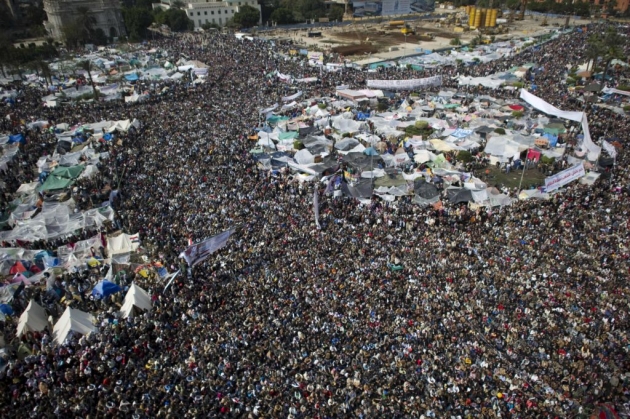
Democracy happens in places and with crowds

Tahrir Square demonstrations
Tahrir Square Demonstrations 2011

In Community, Democracy, and Performance, I spent a chapter looking at how festivals opened up the street in a manner that could reenact the moments when the crowd asserted its role in civil society. “Celebrations in Cities: public spheres/public spaces” reexamined the fear of the crowd, and the value of crowd moments in the history of democracy. “Let’s now return to the festival, and to the movement of people across national boundaries, and how festival production can loosen the grip that the nationally domesticated space holds over the city. A civil democracy is realized through actions taken by its citizenry. This use of the street for demonstrations of civic belonging and collective celebration or protest is not merely window-dressing for the mass media.”

Today we salute the people of Egypt and their weeks of democratic crowd moments—moments that have awakened a new space for democracy in that ancient place. Tahrir Square will now be a space for the civil crowd, and a place where reenactments of civic participation will remember these weeks, and also the people who died.

In Community, Democracy, and Performance, I expressed a concern about the lack of such founding moments/places in the city of Kyoto. What did that lack mean for the daily performance of democracy? The same might be said about Baghdad. When your democracy is delivered by Donald Rumsfeld and a foreign army, how do you reenact this as a feature of daily life? How do you own it? Egypt will not need to face such questions. They bought their democracy in the streets, and they can return to the same streets at any time to remember and reassert their national public sphere.

Photo Credit: Pedro Ugarte/AFP/Getty Images

Broadband as a public right of way

The public street

This essay was written in support of the Super Santa Barbara 2011 art exhibit on net neutrality

In the forty-one years since UC Santa Barbara became the third node on ARPANET (the government funded precursor to the Internet), generations of Santa Barbarans have been born into lifescapes increasingly dominated by “online time.” The growth of the Internet and of the World Wide Web has become a case study of government support and private initiative working in concert to support a wide range of digital opportunities. In the last several years these opportunities have expanded to the point where we can say that Internet access is now integral to our private and public lives, and to commercial interests and civil society alike.  As remarkable as the past four decades have been, the time has come to make some fundamental decisions about our digital future. In Santa Barbara, one of these decisions will be the construction of new broadband capabilities that will enable full participation in the public sphere and the digital economy.

A recent (2010) study of nationwide broadband services by the US Department of Commerce found that only about 30% of these services actually meet the minimum threshold of “broadband.” Most households paying for broadband in Santa Barbara County through COX, Comcast, Verizon, or satellite are, in fact, not getting anywhere near the minimum services that would count as broadband. And visitors from other nations (or, in my case, a son returning from college abroad) are often amused or appalled by how slow the Internet connections are in Santa Barbara. After pioneering the Internet in 1969, Santa Barbara now finds itself relegated to a digital backwater.

Because Santa Barbara County (and City) have only some tens of thousands households, commercial providers lack the incentives to upgrade services by bringing optical fiber to the home. At the same time, these service providers (which are more accurately described as content providers) argue strongly against the notion of community-run broadband. Advocates of community-run broadband are quick to note that their service is “content neutral.” This means that for-profit content providers can use community Internet to carry their own content. Even as their current, wire-based infrastructure becomes increasingly outmoded, local Internet providers—who refuse invest in optical fiber for Santa Barbara—continue to assert that their original investments need to be protected from future public investments.

The struggle for net neutrality hits the pavement in Santa Barbara as a struggle for community-run  broadband: our only certain road to high-speed broadband access for homes and businesses. One fundamental argument for community-run broadband services comes from the notion of “property-in-common” that communities still use to assert public ownership of rights of way for highways and waterways. The “digital highway” metaphor turns out to be a rather useful notion to support community-sponsored broadband.

In the US, roadways and waterways share a common feature of being held in public and maintained as a public good. Public goods and democratic principles walk hand in hand. To participate in a democracy requires an equal access to information and an egalitarian freedom of political action. Lewis Hyde, in his book Common as Air (2010) notes that when John Adams as a young adult acquired the right to vote (by inheriting property), he also acquired the obligation to help his township maintain a local bridge that was in need of repair. While the US federal government has a history of licensing rights to other forms of utility infrastructure (energy, telecommunications, railways, etc.), roadways and waterways have always been kept as a public trust.

From the start of the nation, roadways and waterways were viewed as key infrastructure for the common weal: for commerce, for travel, and for leisure. They are available for a wide range of uses by and for the public. (Yes, there are few short stretches of private highway in the US, but these are few, and historically have later reverted to state ownership.) The City of Santa Barbara owns and maintains all city streets for public use, and leases out rights of way to private utility companies. Many of the utilities that use the street as a right-of-way are not public. Privately owned electric and telephone poles and wires festoon the streets. Natural gas lines are buried under the streets. Water and sewer lines are operated by public companies. Public and private interests are gathered into a productive partnership to serve the people of Santa Barbara.

Throughout history, public streets and parks have also been used for civic celebrations, farmers markets, political demonstrations, and state spectacles. Streets create spaces for democratic action and for the voices of difference and dissent. Their publicness warrants them for these roles. Today, much of the civil discourse has moved from the park to the blogosphere. The means of dissent and redress are also digital. From Twitter to Wikileaks, the news comes from unexpected sources on the Internet. Today, civil society meets on Facebook more than at the coffee shop.

In its early days as a simple data link between research centers and then as a carrier of electronic mail, ARPANET may have resembled a telegraph system more than it did a city street. However, as the Internet emerged, the range of interests and activities it might carry expanded to the point where, today, it very much holds a place in the digital lifescapes of Santa Barbara as important and diverse as do the City streets and sidewalks for our physical lifestyles. Our daily lives are increasingly digital, and the lack of real, affordable broadband means that we are living on some narrow, digital back alley, instead of the bright throughway we would prefer for our lives.

The people of Santa Barbara deserve a broadband service that can warrant their trust as a platform for civil engagement, education, entertainment, and commerce. Santa Barbara residents and City staff joined together to respond to the Google plan to introduce gigabit Internet to a number of sample locations. The GigabitSantaBarbara.org community helped City staff create its application. We are now waiting for Google to announce its first round of winners.  But win or lose, the future of net neutrality in Santa Barbara will be a brighter future when the City and County remember that broadband is more than a private utility: broadband is as much a public trust as is any city street.

Photo Credit: Some rights reserved by Ben Fredericson (xjrlokix) on Flickr

Academic Publishers, Marketing Myopia, and the Next Phase of Scientific Publication

Several years ago at a DLESE (an NSF-sponsored earth science digital library organization) meeting at Cornell University, a breakout meeting was held on the topic of “relations with academic publishers” (or something similar). The organizer, from a major university press, asked the assembled group of academic participants, “What was your best experience with an academic publisher?” The idea was to reveal best-practices that would inform how the digital library could work in concert with publishers.

What happened next was instructive. The first respondent noted that he could recall no “best experience,” and then told a story of editorial neglect bordering on malfeasance by a noted journal (which will not be herein mentioned). The second respondent, perhaps primed by this story, also confessed that her research had been poorly served by the reviewers and the editors of more than one academic journal. The next five respondents listed still more occasions where their work, or that of their students, had been mishandled, delayed, derailed, and purloined during publication. The organizer struggled to redirect the conversation, but by the end of the hour virtually every person in the room had confessed their frustration, their anger (tinged with rage at moments), and their doubts about the entire enterprise of academic publication.

Publishers might respond that academics always feel that their work is under-valued and resent the changes reviewers suggest and editors demand. This response, while accurate, avoids the larger issues now at play in the “ecology” of academic publication. Publishers might want to frame the problem as simply one of the difficulty of vetting and polishing high-quality work. However, for the people (the content providers) in the breakout meeting the problem was that the process of academic publication is failing to support the goals of science in general, and the needs of their research (and the process for their careers) specifically. At the end of the break-out meeting, the mood of the room was something like a kinship of people who had been taken hostage by a dysfunctional service they could neither influence nor avoid.

With new opportunities currently unfolding for rapid digital dissemination of academic content, the tensions between academic publishers and the people who are, simultaneously, their content providers and main customers may find resolution in a combination of technology and culture. Academics are positioned to move ahead into emerging digital distribution channels. Commercial and non-profit publishers that cling to the logic of their historic, paper distribution channels (the constraint of a scarcity of space in the printed form, peer-review by a few anonymous individuals, access by subscription, research libraries have deep-pockets), will fall into the trap of marketing myopia (Theodore Levitt’s term [Harvard Business Review 1960]). Levitt asked the question, “What business are you in?” Each university press, academic organization press, and for-profit publisher needs to find a new answer to this question.

This new answer will need to embrace some new/old ideas about how the academy works in the digital era, and where value-added services might support a new business model. Clearly, the current model has aged beyond a simple death, and into some zombie state. Curiously, the original (350 year-old) model for the Philosophical Transactions of the Royal Society may closely resemble what the next phase of academic publishing will look like. Henry Oldenburg, the first Secretary of the Royal Society, took on the task of gathering and publishing all of the letters sent to the Society. Publication was designed to be as rapid as possible and the value of each letter was to be determined by the readers.

The living-dead publisher perspective (propelled by marketing myopia) is evident in the response that various publishers’ associations made to a study sponsored by JISC on the economics of various alternative forms of scientific publication. One of these forms, as modeled on the ArXiv project (http://arxiv.org/) would reduce overall cost of publication by about eighty percent (including peer review and copy-editing), while making new findings available almost immediately. Here is a link to the report, the publisher’s response, and JISC’s response to the response (pdf): http://bit.ly/fGJQI0 .

Conversations are occurring at government agencies that want to increase the impacts of the research they fund, at universities that want to extend access to the knowledge they produce, and at conclaves where the digital future of academic publishing is being informed by Web 2.0 capabilities and a host of supporting technologies. These conversations will lead to new directions in federal and foundation funding, new digital objects that link science back to its data, new, community-based standards for sharing data and research, and new academic communities (virtual organizations) where socially networked colleagues will not simply review research archives (and data), but also add value to these objects, build their reputations, support academic career paths, encourage innovation, and attract new students into the academy.

To avoid becoming the “buggy-whip manufacturers” of the 21st Century, academic publishers need to be a part of these conversations; and not simply to defend their zombie business models. Cost savings are opportunities for profit growth. But the future will no longer be hostage to the print model, and the bargain between the academy and publishers will no longer capture research behind subscription pay walls.

Photo Credit: Stathis Stavrianos on Flickr (cc licensed) http://www.flickr.com/photos/stathis1980/4133296950/

Creating the “town-effect” for social networks

Remember back when? Back when you needed to have a .edu account to get into your college’s Facebook network? And then remember when your company could start up a “network” and you could join in? But once you got in, it really just became a label on your profile. Nobody could send a message to the “network.” No members could vote on who administered the “network.” These were containers without purpose. When Facebook abandoned these vacuous networks, nobody really cared. After all there were still “pages.” And “likes” and, for a while, “fans.” Like many others, I became one of the “citizens for boysenberry jam” fans.

Of course, as of now, Facebook has become the monster platform for microblogging, social gaming, and media sharing. In actual terms, every individual member of Facebook is a customer for one giant network managed by Facebook (for its own purposes—read: IPO). Despite some attempts to provide for member input into its rules, Facebook continues to mold the user experience to meet its own goals. Getting a Facebook account is like moving into a city of 500 million people without a map and no way of fostering anything like a neighborhood that responds to your needs.

This membership model is significantly different from, say, the Ning model, where communities of interest spun up their own networks, and within these networks, smaller working-groups for focused collaboration and event planning. The real problem with the Ning model is discoverability. The networks are too small and their visions mostly too modest for them to have much of a presence on the big-bad web. They are like villages in the valleys; useful for their core membership, but not likely to grow into anything significantly more than what they were in the beginning. Here you’ll find brands and fans and NGOs galore. The sites are better than web portals for many purposes, but surely there’s something missing.

This something is what I would call the “town-effect.” A town is bigger than a village and smaller than a city. Neighbors live in a town, but so do strangers. So there are new people to meet. Unexpected, potentially marvelous events might happen. The town has a town hall; some place and some manner of governing what happens and why. This facility for self-governance is entirely lacking from Facebook and is mostly trivial for Ning (where, if you don’t like the network rules, you can always just start your own). The best cities in the world are really made up of several towns. From Seattle to New York to Paris to Rome: residents will tell you the town where they live, rather than the city where they dwell. They live in Fremont, or The Village, or Covent Garden, or Navona. Within these towns people live in neighborhoods where they might know many of the people they meet. But they also cultivate the conviviality of their town as a place to find new friends and opportunities. And when they visit a neighboring town, they know they are strangers only once (thanks Liz!).

The real challenge for the future of social networking is to build a platform where digital towns can emerge. Such a platform would enable a network-of-networks; each of which would be capable of growing into a digital-town, with real self-governance and aspects of community (opportunities for trustful collaborations, reputation building, micro-volunteering).  Each network can determine its own membership rules. An individual might be a member of several networks at the same time. The platform would scale up to millions of individual members, but any one network might have ten to fifty thousand.

In the US there are about two million people with PhDs (and twenty-times that number globally). The research interests of these individuals are amazingly diverse. An academic network-of-networks would reasonably contain several dozen networks centered on arenas of interest. Each network is a container that filters the content and amplifies the opportunities of its members. The “early American novel” network would not need to handle content from the “biogenetic structuralism” network. Job opportunities in geology would not show up in the oncology network. Any individual can join more than one network as their own interests dictate. And technical innovation at the platform level “lifts all boats.” Picture every network as a vibrant townscape, and you are approaching the model for this new platform.

Many of the potentials for social networking have not be explored by Facebook, which made the decision early on to dissolve its network-of-networks in favor of one great city.  The technology to create this network-of-networks is already here. In fact, this is built into Drupal Gardens (a software add-on to Drupal). I’m still on Facebook. And yet, beyond the possibility that someone from my kindergarden class might decide to friend me, I get very little out of being one among 500 million. I would feel much more productive and at home in a digital town.

Photo Credit: CC licensed by SouthernPixel on Flickr.

Creating Community is a Process and a Goal

People who talk to me about “adding a little Web 2.0” to their sites fail to understand that the heart of every successful Web 2.0 venture are the various communities that grow to depend upon the opportunities they acquire through the service. That frosting of Web 2.0 people apply to their portals and websites is mostly aggravating overhead. For the user, it’s like getting a box of chocolate-covered gravel.  Sure, you can add a dozen social media posting links for readers, but if you really want to start a conversation, then you need to dig a little deeper and offer the reader a better bargain for their end of the deal. Find a way to reward those readers who offer feedback or repost your content, and they might just do this again and again.

Should your Web 2.0 designs include building and supporting one or more communities of users, then you will certainly need more than a little Web 2.0 in the mix. Mostly you will need to start with a modest number of tools (microblogs, group support, media sharing) and then tune this list using the recommendations of active users. As soon as someone needs to sign in, they should also want to sign on as a member of something larger than just the software platform.  Make your Web 2.0 services launching pads for those who are ready to become community leaders. And then just stand back and watch.

Photo Credit: Chris Devers on Flickr cc license

Facebook, schmacebook: We’re getting tired of shopping at the company store

I can’t wait to get off Facebook. Everyone I know can’t wait to get off Facebook. We are all waiting for the next good thing to come along and take us off this island of wasted opportunities. The two questions surrounding this situation are these: what’s wrong with Facebook? and what can we know, say, or do to help the next good thing happen?
A large problem with Facebook has to do not with what it does (or fails to do) but what it is. In fact, Facebook nailed the whole “social” side of social networking early on, only to then lose it. Facebook is a piece of software run by someone else with a business model designed to maximize how my content can be used by them to make money, but not for me. I donate my content and my time, and they keep tweaking the service to make my contributions more valuable for them. This situation is hardly a secret, so we are not talking about deception here. Just bad faith. Facebook is a social network service designed to convert my efforts (and those of 500 million others) into their IPO. Fine. For this, what do I get? A place to pop up microblogs (status updates). A space for random photos and videos (and a not very good service in terms of storing and retrieving these).  A constantly changing user interface that sends me suggestions I don’t need. A collection of my stuff that forever and without compensation now belongs to Facebook. There is no exit from Facebook. Users can only flee. But flee to where?
The next good thing in social networking will have to so several things better than Facebook:
  • Be big and small at the same time. Be a network of networks where each network has the means and the incentive to become more coherent and thus more useful and attractive. 500m members don’t help me out. 500 of the right members, with the right tools. That’s what I’m looking for.
  • Build in real reputation services, on top of powerful collaboration and publication tools. I’m looking for a place to publish once and publish everywhere. I need to know who’s reading what I contribute. I want to reward others for their insights.
  • Build in content sharing services so that I can load up my really good content and have this licensed (Creative Commons) and cited.
  • Build in property and privacy rules so that I control my own contributions. Give me an exit that packages all my content for me to take somewhere else and erases all of this on the system. Chances are I will not use this, simply because it is there. If you love my content, let it go. That’s how you get me to stay.
  • Last, and most importantly: build in network governance so that I have a say in how my social network(s) in the system are managed. I might want to donate some time to curate a part of the content. I might want to help build some policies about member services. Governance is the launching pad for network growth. When members own their own networks they care for and about these. Leaders emerge. Members become evangelists. This is the future of social networking. It looks a lot like democracy. Get used to it.
Back when a mining company opened up in a remote village it would force its workers to use the company store by paying them with scrip only that store would honor. The prices in the company store were managed to the company’s benefit. Often it was a pastel kind of slavery. Sound a lot like Facebook? This is where we are today in the tail-end of the first generation of social networking. We are living our online lives in the company store. And we are ready to jump ship.
Photo Credit: CC licensed for reuse by jekemp