Santa Barbara Needs a Street Painting City Code Section

Santa Barbara Needs a Street Painting City Code Section

THE STORY OF SANTA BARBARA’S STREET PAINTING CODE
How a Neighborhood Transforms Its Street: A Narrative Guide
Imagine you live on a quiet residential street in Santa Barbara. You’ve noticed how neighbors rarely interact, how cars speed through a bit too fast, and how the intersection at the end of your block feels cold and uninviting. Then you learn about street painting — the practice of transforming ordinary asphalt into vibrant community art — and you wonder: could we do this here?
This is the story of how Santa Barbara’s proposed street painting code would work, told through the journey of a neighborhood project from conception to celebration.

CAVEAT: I am embarrassed, and a bit amazed that Claude AI used my prompts to create this text, which is very much what I wanted to say here. I’m sorry (well, maybe not) that this took one hour instead of a couple days.

Chapter 1: The Dream Begins

It starts with an idea. Most likely you saw how they painted State Street, or a photo of a painted intersection in another city, or read about Portland’s famous community street paintings. You envision a colorful mandala at your intersection, or perhaps a garden scene that makes drivers slow down and smile. This is where Section 22.60.050 Part A comes in — the code’s statement of purpose. The City recognizes that street painting isn’t just art; it’s “community expression, placemaking, and traffic calming.” Your dream aligns with the City’s vision.
But before you grab a paintbrush, you need to understand what you’re proposing. Part B defines the terms: an “intersection painting” covers the area within the crosswalks at all four corners, while a “mid-block painting” sits between intersections. And crucially, you can’t use just any paint — “approved paint” must meet California’s slip resistance standards, ensuring pedestrians won’t slip when it rains.
Chapter 2: Is Your Street Eligible?

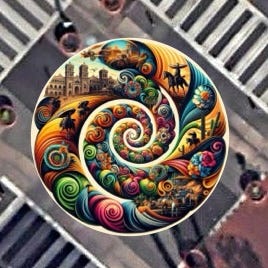
Not every street can become a canvas. Part D lays out the eligibility criteria, and it reads like a checklist for finding the perfect location. Your street must be a “local residential street” — think quiet neighborhood roads, not busy thoroughfares. The traffic counters come out: if you want to paint an intersection, fewer than 3,000 vehicles should pass through daily. For a mid-block painting, the limit is 2,500 vehicles.
You walk your street with fresh eyes. No bus routes rumble past — check. The fire department hasn’t designated it as a primary emergency route — check. The pavement is smooth, without major cracks, and according to public works, it’s not scheduled for repaving anytime soon — check. Your street qualifies. The dream is still alive.
Chapter 3: Building Community Support

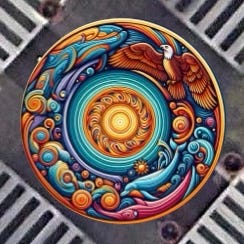
Here’s where the project becomes truly communal. Part E requires you to knock on doors and have conversations. You need written consent from 75% of your neighbors — not just a simple majority, but a strong supermajority. For an intersection painting, you need signatures from properties on all four sides.
You spend weeks talking to neighbors. Mrs. Rodriguez on the corner loves the idea and volunteers to help paint. The young family with kids thinks it will make the street safer. Mr. Chen is skeptical at first but warms up when you show him pictures from other cities. Slowly, the signatures accumulate. The project is building momentum, and something magical is happening: neighbors who barely knew each other are now planning something together.
Chapter 4: The Design Takes Shape

With community support secured, you move to the creative phase. Part F governs design standards, and it’s a balance between artistic freedom and practical safety. You gather a group of neighbors for design sessions. Someone suggests a sunburst pattern. Another proposes incorporating native California plants. A local artist offers to help create the rendering.
But there are rules. Existing traffic control markings — stop bars, crosswalks, lane lines — must remain visible. You can paint around them or incorporate them into the design, but drivers must still see them clearly. No commercial logos, no political messages, nothing that could be mistaken for an official traffic sign. The design must be visible but not so reflective that it creates glare. And if your painting includes crosswalks, it must maintain those tactile warning surfaces for people with visual impairments — the ADA compliance requirement.
Your group settles on a beautiful geometric design featuring blues and yellows that evoke Santa Barbara’s ocean and sunshine, with native wildflowers adorning the corners. The stop bars will be freshly painted in bright white over the design.
Chapter 5: The Paper Trail

Now comes Part C: the two-permit system. You need an “encroachment permit” because, technically, your painting is a structure in the public right-of-way — something that will remain in place. You also need a “temporary street closure permit” because you’ll need to close the street while painting.
Part E details what goes into your application packet: your detailed design drawings with precise dimensions, that stack of neighbor signatures you collected, a traffic management plan showing how cars will detour around your closed blocks, documentation that your chosen paints meet slip-resistance standards, a maintenance plan promising to keep the painting fresh, and proof of liability insurance.
You submit everything to the Public Works Director. The waiting begins.

Chapter 6: Paint Selection and Preparation

While your application is under review, you tackle Part G: paint requirements. This isn’t a trip to the hardware store for regular latex paint. You need specialized products — water-based, low-VOC paints with slip-resistance additives that meet California Department of Transportation standards. The Public Works Director maintains an approved list, and you order from these specific products. They’re more expensive than house paint, but they’re designed for exactly this purpose: outdoor durability and pedestrian safety.
You organize a fundraiser. Neighbors chip in. A local business makes a donation. The paint order is placed.

Chapter 7: The Big Weekend

Your permits are approved! Part H grants you up to 16 hours within a single week for your intersection painting — double the usual 8-hour block party limit because painting an intersection is a bigger job. You can spread these hours over multiple days, so you plan for two eight-hour days: Saturday and Sunday.
Part I governs the actual installation. Friday evening, you and a crew of volunteers install the barricades and cones according to your approved traffic management plan. Signs go up: “Street Closed for Community Painting Project.” But crucially, one lane remains open as an alternate route — emergency vehicles must always have access.
Saturday morning arrives with perfect weather — sunny, above 50°F, and no rain forecast for the next 24 hours (Part I.5). The street has been swept clean. An adult supervisor is always present as neighbors come and go throughout the day. Kids paint alongside their parents. Teenagers handle the detailed work. Someone brings a cooler of lemonade. Music plays. What started as a street painting project has become a neighborhood festival.
By Sunday afternoon, the intersection is transformed. Where there was once drab gray asphalt, there’s now a burst of color and community pride.

Chapter 8: Living with Your Creation

The paint dries. The barricades come down. Cars return, but something has changed — drivers slow down to admire the artwork. Pedestrians pause to take photos. Part J now governs the life of your street painting.
You and your neighbors — those who signed the consent forms — are jointly responsible for maintenance. The painting looks vibrant now, but Part J.2 reminds you that it will need refreshing every 1–2 years. You form a small committee. Someone sets up a neighborhood fund for future paint purchases.
Two years pass. The painting has weathered well, but some areas are fading. Part K allows you to renew your permit for another 24-month term. This time you only need 51% neighbor support (instead of the original 75%), and almost everyone signs immediately. The street painting has become a beloved neighborhood landmark.

Chapter 9: When Reality Intrudes

Year three brings a challenge. The water department discovers a pipe that needs replacing — right under your beautiful intersection. They have to dig it up. Part J.4 is clear: when the City needs to perform street maintenance or utility work, they’re not obligated to restore your painting. The backhoe comes. Your artwork is destroyed.
It’s disappointing, but the code anticipated this. After the utility work is complete and the street is repaved, you can reapply to repaint. The neighborhood rallies again. This time the process is faster — you know the ropes. Within three months, an even more beautiful version emerges, incorporating lessons learned from the first painting.

Chapter 10: The Bigger Picture

Part N hints at something larger: your street painting project might coordinate with other City initiatives. The Public Works Director mentions that your intersection is part of a Safe Routes to School study. Your traffic-calming art aligns with the City’s Vision Zero safety goals. Suddenly your neighborhood project is part of a citywide movement.
Other neighborhoods hear about your success. They start their own street painting projects. Within a few years, Santa Barbara has two dozen painted intersections, each reflecting its neighborhood’s unique character. The code you helped pilot has transformed how the City thinks about streets — not just as transportation corridors, but as public spaces for community expression.

Epilogue: The Fee Waiver

One detail you appreciated from the beginning: Part L.2 allowed the Public Works Director to waive or reduce fees for “neighborhood-organized, non-commercial street painting projects that demonstrate significant community participation and benefit.” Your project qualified. The City recognized that you weren’t trying to make money or advertise anything — you were building community. The fees were minimal, making the project accessible to any neighborhood with a dream.

The Moral of the Story

This code tells a story about what’s possible when regulations enable rather than prohibit. It’s not a story about bureaucratic red tape, but about a legal framework that says “yes, and…” to community creativity. Yes, you can paint your street, AND here’s how to do it safely. Yes, neighbors can transform public space, AND the City will ensure it doesn’t compromise traffic safety or create liability issues.
The code protects everyone: the artists, the neighbors, the pedestrians, the drivers, the City, and the future maintenance workers who need slip-resistant surfaces. It sets standards high enough to ensure quality and safety, but not so high that ordinary neighborhoods can’t participate.
Most importantly, it recognizes that streets are more than infrastructure — they’re community spaces. And when communities are empowered to make those spaces beautiful, something magical happens: neighbors connect, children play more safely, drivers slow down, and a simple intersection becomes a landmark that defines a neighborhood’s identity.
That’s the story Santa Barbara’s street painting code would tell — a story where creativity, safety, and community come together on the canvas of our shared public streets.

Note: This code section is modeled after Portland, Oregon’s street painting program requirements and adapted for Santa Barbara’s administrative structure, California regulations, and community needs.

DRAFT STREET CLOSURE EXAMPLE CITY CODE

Santa Barbara Municipal Code: This allows you to close a street. We just added Block Parties as a new reason to close a street.

A Formatted version of this code CLICK HERE.

Santa Barbara Municipal Code
Chapter 22.60 — STREETS AND SIDEWALKS
Section 22.60.045 — Temporary Street Closures
The Public Works Director may close or by permit allow to be closed temporarily any street or portion thereof for the following reasons:
A. Construction and Installation Activities
To facilitate construction, demolition, or installation of facilities on public or private property.
B. Street Protection
To restrict vehicular use of an unimproved street for the protection of the public or to eliminate a neighborhood nuisance.
C. Block Parties
To provide for neighborhood block parties, allowing residents to gather and celebrate community within their residential areas.
D. Community Events
To provide for community events, festivals, farmers markets, and public gatherings that serve the community interest.
E. Filming and Productions
To accommodate film production, commercial photography, or similar activities requiring temporary exclusive use of street areas.
F. Athletic Events
To facilitate organized athletic events, including but not limited to races, walks, cycling events, and similar activities.

Permit Requirements
All temporary street closures authorized under this Section shall include the requirements of the Public Works Director and shall provide for:
Insurance Coverage: Appropriate liability insurance as required by the Public Works Director protecting the public and the City from claims arising from the closure or event.
Traffic Control Plan: A traffic management plan approved by the Public Works Director that addresses:
Detour routes for through traffic
Access for emergency vehicles
Notification to affected residents and businesses
Placement of barricades and signage
Duration Limits: Specification of the duration of the closure, which shall not exceed:
Block parties: 8 consecutive hours
Community events: As determined by the Public Works Director based on the nature and scope of the event
Construction activities: As necessary to complete the work safely
Advance Notice Requirements:
Block parties: Minimum 14 days advance notice; written consent from 75% of households on the affected block
Community events: Minimum 30 days advance notice for events affecting arterial streets; 14 days for local streets
Emergency construction: Immediate closure permitted with notification to the Public Works Director within 2 business hours
Notification Procedures: The permittee shall be responsible for notifying all affected residents, businesses, and property owners at least 72 hours prior to the closure, except in emergency situations.
Restoration Requirements: The permittee shall restore the street area to its original condition immediately following the event, including removal of all barriers, signage, and debris.
Indemnification: The permittee shall indemnify, defend, and hold harmless the City and its officers, employees, and agents from all claims, damages, losses, and expenses arising from the permitted street closure.

Block Party Specific Provisions
For block parties authorized under Subsection C above:
Eligible Streets: Block parties may only be permitted on local residential streets. Arterial streets, collector streets, and streets designated as emergency access routes are not eligible for block party closures.
Frequency: No more than two block party permits per calendar year shall be issued for the same street segment.
Emergency Access: At least one lane must remain accessible for emergency vehicle access at all times, or alternative emergency access routes must be approved by the Fire Chief.
Alcohol: Any service or consumption of alcoholic beverages must comply with California ABC laws and City ordinances.
Amplified Sound: Any amplified sound must comply with City noise ordinances and shall cease by 9:00 PM.
Fees: Block party permit fees shall be established by resolution of the City Council and listed in the City’s Master Fee Schedule.

Authority and Enforcement
The Public Works Director is authorized to:
Establish administrative rules and application procedures for temporary street closures
Deny permits that would create unsafe conditions or unreasonably interfere with public use
Impose additional conditions as necessary to protect public health, safety, and welfare
Revoke permits for non-compliance with permit conditions
Coordinate with the Police Department, Fire Department, and other City departments as necessary

Exemptions
The following activities are exempt from the permit requirements of this Section:
Street closures by the City for public works projects or maintenance
Emergency closures by law enforcement or fire personnel for public safety
Funeral processions conducted in accordance with state law
Closures authorized by separate City ordinances or resolutions for recurring annual events

Note: This proposed code section is modeled after Portland, Oregon City Code Section 17.24.017 and adapted for Santa Barbara’s administrative structure and community needs.

NOW THE STREET CAN BE CLOSED

NEXT YOU GET TO PAINT!

DRAFT STREET PAINTING PERMIT CITY CODE

Santa Barbara Municipal Code: This specifies street painting regulations.

A FORMATTED VERSION OF THIS CODE CLICK HERE

DRAFT EXAMPLE CODE
Santa Barbara Municipal Code
Chapter 22.60 — STREETS AND SIDEWALKS
Section 22.60.050 — Street Painting Projects
A. Purpose and Intent
The purpose of this Section is to allow neighborhood residents to create artistic street paintings as a form of community expression, placemaking, and traffic calming while ensuring public safety and maintaining the integrity of City streets.
B. Definitions
For purposes of this Section:
Street Painting means artistic designs, murals, or patterns painted on street pavement surfaces, including intersections and mid-block crosswalks, created by community members as a neighborhood improvement project.
Intersection Painting means a street painting located within a street intersection, including the area bounded by crosswalk extensions at all four corners.
Mid-Block Painting means a street painting located between intersections on a street segment.
Approved Paint means paint products that meet California Department of Transportation slip resistance standards and have been approved by the Public Works Director for use on public streets.
C. Permit Requirements
Any person or group desiring to create a street painting must obtain two separate permits:
Encroachment Permit: An encroachment permit issued pursuant to Section 22.60.014 for installation and maintenance of the street painting as a structure or improvement in the public right-of-way.
Temporary Street Closure Permit: A temporary street closure permit issued pursuant to Section 22.60.045 to close the street during the painting event.
D. Eligible Streets
Street paintings may only be authorized on streets meeting all of the following criteria:
Traffic Classification: The street must be classified as a local residential street. Arterial streets, collector streets, and designated truck routes are not eligible.
Traffic Volume:
For intersection paintings: Average daily traffic must be less than 3,000 vehicles
For mid-block paintings: Average daily traffic must be less than 2,500 vehicles
Transit Routes: The street must not be a designated transit route or regular bus route.
Emergency Access: The street must not be a primary emergency response route as determined by the Fire Chief.
Street Condition: The street pavement must be in good condition, free of major cracking, potholes, or scheduled for resurfacing within 24 months.
E. Application Requirements
Applications for street painting projects must include:
Community Support: Written consent from at least 75% of property owners or households on the affected block(s), with signatures from properties on all sides of a proposed intersection painting.
Design Plans: Detailed drawings or renderings of the proposed street painting design, including:
Dimensions and placement
Color scheme
All text or messaging (if any)
Traffic control elements (e.g., stop bars, crosswalks) that must remain visible
Traffic Management Plan: A plan showing how traffic will be managed during the painting event, including detours and emergency vehicle access.
Paint Specifications: Documentation that proposed paints meet slip resistance requirements and are approved products.
Maintenance Plan: A plan for ongoing maintenance and repainting, including identification of responsible parties.
Insurance: Evidence of liability insurance in amounts specified by the Public Works Director.
F. Design Standards
All street painting designs must comply with the following standards:
Traffic Control Devices: Existing traffic control markings, including stop bars, crosswalks, lane lines, and directional arrows must remain visible and may be incorporated into the design or repainted on top of the artistic design.
Visibility: Designs must not impair driver visibility or create visual confusion that could compromise traffic safety.
Content Restrictions: Street paintings may not contain:
Commercial advertising or business logos
Political messages or candidate endorsements
Obscene, offensive, or discriminatory content
Text or symbols that could be confused with official traffic control devices
Reflectivity: Designs must not use highly reflective materials that could create glare or distraction for drivers.
Accessibility: Designs in crosswalks must maintain detectable warning surfaces and comply with ADA requirements.
G. Paint Requirements
Approved Products: Only paint products specifically approved by the Public Works Director may be used. Approved paints must:
Meet California Department of Transportation slip resistance standards
Contain slip-resistance additives
Be durable for outdoor street use
Be water-based and low-VOC
Paint List: The Public Works Director shall maintain and publish a list of approved paint products.
Prohibition: Latex house paint, spray paint, and other non-approved products are strictly prohibited.
H. Street Closure Duration
Temporary street closures for street painting projects may be granted for:
Intersection Paintings: Up to 16 hours within a single week, which may be divided over multiple days.
Mid-Block Paintings: Up to 12 hours within a single week.
Block Closure Extent: Street closures may extend up to 4 blocks to accommodate intersection painting projects.
I. Installation Requirements
During street painting installation:
Supervision: At least one adult supervisor must be present at all times during the painting event.
Traffic Control: Appropriate barricades, cones, and signage must be installed per the approved traffic management plan.
Emergency Access: One lane or an alternative route must remain accessible for emergency vehicles at all times.
Street Preparation: The street surface must be clean, dry, and free of debris before painting begins.
Weather Conditions: Painting may only occur when weather conditions are suitable (no rain in forecast for 24 hours, temperatures above 50°F).
J. Maintenance and Removal
Maintenance Responsibility: The permittee and consenting property owners are jointly responsible for maintaining the street painting in good condition.
Repainting: Street paintings must be repainted or refreshed as needed to maintain appearance, typically every 1–2 years.
Deterioration: If a street painting deteriorates significantly and is not maintained within 90 days of written notice from the Public Works Director, the City may remove the painting and charge costs to the permittee.
City Projects: If the City needs to perform street maintenance, resurfacing, or utility work that would damage or remove the street painting, the City is not obligated to restore the painting. The permittee may reapply to repaint after City work is completed.
Removal: The City may require removal of a street painting at any time if it becomes a safety hazard, violates permit conditions, or is otherwise determined to be contrary to public interest.
K. Permit Duration and Renewal
Initial Term: Encroachment permits for street paintings are valid for 24 months from the date of installation.
Renewal: Permits may be renewed for successive 24-month periods upon application and payment of renewal fees, provided the painting remains in good condition and continues to meet all permit requirements.
Community Support: Renewal applications must demonstrate continued community support with signatures from at least 51% of property owners or households on the affected block(s).
L. Fees
Permit Fees: Application fees for street painting encroachment permits and temporary street closure permits shall be established by resolution of the City Council.
Fee Waiver: The Public Works Director may waive or reduce fees for neighborhood-organized, non-commercial street painting projects that demonstrate significant community participation and benefit.
M. Liability and Indemnification
As a condition of the permit, the permittee shall:
Maintain liability insurance naming the City as an additional insured in amounts specified by the City.
Indemnify, defend, and hold harmless the City and its officers, employees, and agents from all claims, damages, losses, and expenses arising from the street painting or painting event.
Acknowledge that the City makes no warranties regarding the longevity of the street painting and that City street maintenance activities may damage or remove the painting without compensation.
N. Coordination with Other City Programs
The Public Works Director may coordinate street painting projects with other City initiatives, including:
Traffic calming programs
Safe Routes to School projects
Vision Zero safety improvements
Community art and placemaking initiatives
Neighborhood improvement districts
O. Administrative Rules
The Public Works Director is authorized to adopt administrative rules and procedures to implement this Section, including:
Detailed design guidelines and review procedures
Approved paint product lists and specifications
Standard permit conditions and insurance requirements
Community engagement and notification procedures
Maintenance standards and inspection protocols

Note: This code section is modeled after Portland, Oregon’s street painting program requirements and adapted for Santa Barbara’s administrative structure, California regulations, and community needs.

Earth Data Rescue 2025

2016 was a different election: 2024 is so much more important

The election of a climate-change denying US president in 2016 gave rise to the potential for administrative policies that would obstruct the public’s use of government-held Earth data. Very soon after taking office, the Trump administration instructed that government websites be scrubbed of climate change mentions. These web resources were also the public-facing portals for data access. Alarmed, academic nerds at several universities began to crawl and save website information and the data they pointed at. See: Wired Magazine, February 2017.

The web data were tiny snippets of the much larger, and more important, long-term data stores kept at NASA. The task of rescuing these would be monumental. NASA holds a data record from several decades of satellite observations. These data are the backbone for planetary research into the Earth’s climate and biological systems and processes. NASA makes these data available for free. NASA Earth Science Division (ESD) controls several orbital Earth observing platforms, and stewards the data these produce. Future satellites will provide continuity for these data streams. By 2030, these data will grow to more than 200 petabytes.

In the Winter of 2017, a small group of concerned scientists and technology leaders devised a plan to make a copy of all of NASA’s Earth system data, and create an open public resource for these data in Canada.

Preparations were made, and funds secured, to rapidly download all twenty-plus petabytes of NASA Earth satellite data from its data centers (DAACs), using fast data pipes to nearby universities, and racks of high-capacity drives. These would be trucked north. Even though large portions of NASA data are routinely offloaded for research projects at various universities, it was decided that copying the entire data corpus would be the safest solution for complete data rescue. A destination in Toronto was secured.

Through private conversations with DAAC managers, it was determined that no immediate action would be required to rescue data from the NASA DAACs. The managers were certain that they could administratively delay any orders that would limit access or threaten the long term storage of data for long enough to accomplish data rescue. They also mostly doubted that either the top-level civil servants or the political appointees to NASA would threaten such an important national resource. They did, of course, worry about annual budget priorities and future satellite missions.

2025 might signal the end of US Earth data availability

Earth data rescue this time around is both more urgent and less possible than in 2016. 
This time, the amount of data is now more than a hundred petabytes. 
This time, Project 2025 promises to replace thousands of civil servants, probably including DAAC managers, with political appointees. 
This time, there is talk of firing NOAA and NASA scientists, and getting rid of the National Weather Service.

This time… we need to be sure that this time does not happen. So please vote.

The unreasonable effectiveness of shared null results:

or, if open science were Wordle we might usually get the answer on the first line.

Wordle is easy. Science is hard.

This is a blog that compares science (the open kind) to cheating at Wordle. But not in a bad way. This is a blog, so I’ll run the narrative first. I have included links to further readings from The Open Scientist Handbook. [OSH] You can find all the other literature references added at the end.

ASAPbio recently (October, 2022) announced a competition to share negative results as preprints. <https://asapbio.org/competition2022>. Sharing negative results is integral for open science to achieve its unreasonably effective potential. The sharing of all research products is one of open science’s main goals.

We can imagine, in an alternative present, an academic publishing endeavor that has long made space for null-results. Ideally, these results would be available in the same journals that publish positive results, and in the same proportion as these are each generated through rigorous scientific methods. Publication in this manner might fairly accurately reflect the sum of knowledge generated by research (if it included data, software, etc.).

Now, let’s look at the academic publishing regime we have today, where null-results are conspicuously absent, and the published corpus reveals a tiny fraction of the work of scientists across the globe. Sources on the topic of “publication bias” outline how this damages the entire academy. A further assortment of bad practices — of bad science — can also be uncovered through methodological and content reviews of published research. This is where Retraction Watch comes into play.

We can find at least two streams of perverse incentives in the current publication situation. The first is an outcome of the arbitrary scarcity of publication opportunities. This warps the whole research landscape and rewards narrowly selected research results, instead of valorizing methodological rigor. Even the available published work rarely includes enough information to allow replicating the research.

The second stream of bad science is the central role the current publication regime plays in career advancement and future funding. By using metrics that are hooked into “journal impact factors,” and other forms of pseudo prestige (e.g., the h-index), universities and funders get to pretend they can evaluate the merits of a researcher’s work without needing to spend the time and effort to make an actual qualitative review.

Apart from the weaknesses inherent in this metric, simply as a metric, when this metric becomes a goal for researchers, Goodhart’s Law predicts that this will be gamed until its original value is erased or even reversed. The unnecessary scarcity of publication opportunities creates an ersatz elite of “published” academics, and a much larger cohort of undervalued, marginalized researchers. [Fierce equality] (Perhaps another blog is needed to show how academy publication is like TikTok.)

OMG! I just got published in Science!

At the same time, the race to get published crowds out the open sharing of research results. The need to be first also prevents collaborative networked interactions with other teams that could greatly accelerate new knowledge discovery. When the great majority of the actual work of science has no place to be shared, the global work of science is fundamentally diminished.

The current availability of preprint servers for a number of disciplines (and also new AI search engines to facilitate discovery) means we are at the front edge of the capability to demonstrate how widespread, open sharing can decenter the current logic of scarcity, in favor of a new, extraordinary abundance.

Back to Wordle

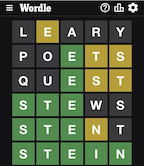
I am going to use Wordle as an analogy that can show the unreasonable effectiveness of open sharing.

Find the right word…

For those of you who don’t Wordle, when you start a Wordle puzzle, you have six chances to uncover the correct five-letter word. Each layer provides information to help you out with the next layer.

Whew! just made it.

You build a solution space for the correct answer by knowing which letters are not used and which are used in the wrong place, or in the correct place.

That’s right. You get to use your own mistakes to learn and improve. In every new layer, the puzzle gets easier. There is also guesswork, and so a bit of luck involved. It’s an elegant design for a short puzzle. You can do one a day.

If Wordle had eight layers, most players would never lose. If Wordle only had two layers, most players would rarely win. Wordle works because its difficulty level is a sufficient challenge to most who play it.

One line is all you get…

But what if your job future depended on you filling in the correct word on the first level? What if you are given this puzzle and told you must guess correctly or find a new position?

You might be tempted to look online and find the answer. Everyone solves the same puzzle each day. Cheat to win? Why not? You can do “bad Wordle.” But then, someone would add a metric based on time, and only the first person who solves the puzzle gets job security. And on and on. The zero-sum-game solution.

However, unlike Wordle, the science puzzle in front of you has never been solved. That’s the whole point. You choose a significant unknown, because that is why you do science. You need to solve something new.

Currently, within the arbitrary scarcity of the publication regime, you need to solve this unknown now, because others are out there looking to solve the same, or related problems. Only the first solution will get published. It’s your lab team against all the others out there. (Of course this is an unnecessary competition, and a hallmark of failed science, but that’s another blog, comparing science with Survivor.) [Playing the game]

Science… only one research project will publish…

When you propose a research experiment, you only get one line: you have one chance to discover a result that explains something new. Nature (actual nature, not the journal) doesn’t give you a lot of hints, and the NSF has (finally) funded this one project for your team.

You are a scientist. You have subscribed to the hardest puzzle anywhere. Your job is to provide the answer to this puzzle. You have lined up all the resources you believe are sufficient. You have a proven methodology and a plan. Your team does the work. You have your results. Now you must publish your work.

science is a lot harder than Wordle… and you only get one line to solve.

Let’s say that getting an article into the academic journal of your choice (the one with a “high impact factor,” or whatever) today requires this:

Today, journals accept only a few research results. They brag about their rejection rate…

After finishing the project your actual research result, the information you found, may look like this:

This finding is as important as any…

Each bit of that finding is as valuable to science as any other finding. It just has no public home to go to. Today you have one sort-of-good — but actually unfortunate — choice, and other “choices” that are not good at all, and totally unfortunate for science.

The “goodish” choice is to keep the data safe, maybe host it up on a repository, and do the write-up for the granting agency. Use the lesson learned for the next research project. Your lab will add this research to its shared knowledge and move ahead. This is the “file-drawer” outcome.

You will wonder how this outcome will affect your ability to get future funding, and realize the lack of a publication might impact your next performance review. You might feel like all the work you accomplished was wasted. Yes, you found out something new, something important on its own terms, only this result was “negative.” It does not spell out a “significant finding” you can use to leverage your career.

Your research revealed a new piece of the larger truth. In terms of the knowledge space of your field, this new information occupies corner of the space of “already-accomplished-research.” It is not any less significant as a finding than any other research. It is another step in the long journey that is science. [Science and the infinite game] However, today, this work matters far less than it should to the academy. And less than it might for your job.

At this point, all of the perverse incentives of current science are now clearly in play if you let them infect what you do next. [Toxic incentives] Perhaps, in some desperation, you go back to the data and revise your hypothesis to match the “findings.”

Maybe you set out to prove that “people who eat their largest meal in the morning gain less weight,” but now your research proves — with great statistical precision — that “people do not eat while they are asleep.”

You shop this “finding” around to journals and one of them publishes it. It is no longer research you are proud of, but your list of publications is larger, and your funder might not notice.

Digging around the data you uncovered something you can show off…

Maybe you cannot find a different hypothesis, so you go back to the data and “regularize” this until some significant pattern pops up. You announce this as a “finding” and shop it to journals. Your lab team will need to be in on this move. They are implicated in your deceit. You figure that nobody will get funded to replicate your work, so this finding will be accepted as legitimate.

You have proven nothing here, but your desperation to save your own career.

Congratulations, your published work will mislead everyone who cites it. You have wounded the body of knowledge you and your colleagues share. Your career now means more to you than the integrity of your work.

Open science can fix this. It must, and it will.

Here is where open science can help. Let us imagine that the academy has promoted publishing null-results on preprint and eprint servers for a decade. With no need for the “file-drawer” option, the number of null-result findings available online is now much larger than the number of recent significant findings. (Note: I use the term “eprint” the signify new publishing efforts that publish all submissions and then do open peer review to add value to these.)

Because nobody needs to contort their research to get published, the actual research statistics being used are much more rigorous, and the data more reusable and available. Let’s add here that a null-result pre/eprint that gets cited is treated the same as any other publication, in terms of career-building metrics. That’s another goal of open science: new institutional cultural practices and norms.

Back to square one… you still need to do the research

Open science still means you are facing the same complex problems

You have just received notice that your funding has been approved. You are still faced with a complex phenomenon to explain, just as before.

Of course, you have already done a complete literature search through all the appropriate journals to see if there are positive findings that would improve the questions you have, and the final hypothesis you will be using. Your research did not end with the already-published positive findings. Before you even wrote you proposal, you expanded your research (using powerful AI-enhanced search routines, and advanced keyword techniques) to include negative-results in related experiments. These are mostly posted on preprint servers.

This is what you discovered: A colleague of yours in Germany did a research project closely related to your work, and this was their team’s result:

You found this on a preprint server…

Another colleague in China also put their negative result up on a preprint server:

This looks very interesting to your team…

A post-graduate researcher in California submitted their research findings to a preprint server:

Unexpected but really valuable

Your team sifts through these findings and their open data. You use protocols developed to match other findings with the phenomenon you are investigating.

You are encouraged when you realize that instead of just this:

The shared resource of null-results has filled in many of the unknowns internal to the unknown you are tackling. You now know so much more about the object/process under study:

You have a better handle on the problem you face. Your team can focus its methods on only those parts that are missing. The rest of the puzzle offers new clues to its solution. You really only need one line to figure this out.

The shared findings occupy much of the original unknown space

You now have a much better starting point, a major advantage, from which to discover something that completes a bit of the landscape of current science knowledge.

and you do not need to do this alone… and there is no race to win (see: R.E. Martin [1998])

Your agency’s program manager is jazzed. Your university puts out a press release. You are networking with new collaborators across the globe, planning the next project together. Of course, you cite the research of all of your sources in your publication. Their shared research products made your findings possible. [Demand Sharing] You add your data to theirs on an open repository. And you pop the resulting publication onto an open, online server.

Science is hard enough. Let’s work in our universities, agencies, and societies to promote the added, unreasonably effective, benefits of open sharing and collaboration.

Certainly the open data you discover from the null-research results cannot be expected to be quite so providential for your work. But these shared resources will offer an abundance of new information and helpful guidance for your own efforts. You are not alone. You don’t have to race. There is no race to win. Your lab has posted seventeen prior research results with data — all of them negative results — up on the web. Your grad students field requests for these data and collect citations for this work. They are making connections across the planet that should enhance their future careers. Curiously, without the race, science moves a lot faster.

A hundred-thousand science research teams working apart, each one of them looking to “win science” by keeping their work secret, would fail constantly against a hundred teams working in concert. [Open Collaboration Networks] The latter gain insights and save time by sharing all of their work toward a common goal of collective understanding.

The unreasonable effectiveness of shared null results is just one example of how embracing abundance instead of scarcity accelerates science knowledge discovery.

CODA: Free riders on the sharing-null-results bus

There is a “what’s wrong with this picture” perspective we can clear up, even if we don’t have an optimal solution space (that space will need to be emergent). Any move from a zero-sum game (e.g., science today) to a non-zero-sum game, allows a few zero-sum game players — those who don’t mind violating cultural norms for their own advantage — to add the shared non-zero-sum assets to their own work, without attribution, and potentially compete more efficiently than before. This is your basic “free-rider” problem. Every commons faces this problem.

Looking at this another way, the free-rider problem becomes a free-rider opportunity within the academy, as long as the cultural norms for sharing are present. [Share like a scientist] Every scientist is a “free-rider” on the discoveries they use in their own research. The real free-rider problem happens when open resources are acquired freely and aggregated by corporations, which want to sell these back to the academy as proprietary property, with some marginal value-added service.

Free-riding is a problem that culture change can help resolve. Yes, there will be those who grab these assets and use them without credit, or massage these and market them. The general strategy for jerks, those who take advantage of a positive cultural change that valorizes sharing, is to marginalize them wherever possible. Academic institutions can cultivate social outrage against those who plagiarize others’ work, including null-results. Agencies can fund open repositories, and require their use. Open means really open. Closed, as John Wilbanks reminded us, means broken.

Additional readings and quotes from them

Bibliographic citations here

On publishing not capturing what science knows, and what reuse requires:

“In present research practice, openness occurs almost entirely through a single mechanism — the journal article. Buckheit and Donoho (1995) suggested that ‘a scientific publication is not the scholarship itself, it is merely advertising of the scholarship’ to emphasize how much of the actual research is opaque to readers. For the objective of knowledge accumulation, the benefits of openness are substantial…

Three areas of scientific practice — data, methods and tools, and workflow — are largely closed in present scientific practices. Increasing openness in each of them would substantially improve scientific progress.”

Nosek, Spies, and Motyl (2012); Buckheit and Donoho (1995)

On publication bias:

“Publication bias is a common theme in the history of science, and it still remains an issue. This is encapsulated in a piece of commentary published in Nature: ‘…negative findings are still a low priority for publication, so we need to find ways to make publishing them more attractive’ (O’Hara, 2011). Negative findings can have positive outcomes, and positive results do not equate to productive science. A reader commented online in response to the points raised by O’Hara: ‘Imagine a meticulously edited, online-only journal publishing negative results of the highest quality with controversial or paradigm-shifting impact. Nature Negatives’ (O’Hara, 2011). Negative results are considered to be taboo, but they can still have extensive implications that are worthy of publication and, as such, real clinical relevance that can be translated to other related research fields.”

Matosin, et al (2014); O’Hara (2011)

On impact factors and the h-index:

“Funders must also play a leading role in changing academic culture with respect to how the game is played. First and foremost, funders have a clear role in setting professional and ethical standards. For example, they can outline the appropriate standards in the treatment of colleagues and students with respect to such difficult questions as what warrants authorship and how to determine its ordering. Granting agencies should clearly emphasize the importance of quality and send a clear message that indices should not be used, as expressed by DORA, which many agencies have endorsed. Of particular importance is for funders not to monetize research outputs based on metrics, such as the h-index or journal impact factor.”

Chapman, et al (2019)

On Goodhart’s Law:

“The goal of measuring scientific productivity has given rise to quantitative performance metrics, including publication count, citations, combined citation-publication counts (e.g., h-index), journal impact factors (JIF), total research dollars, and total patents. These quantitative metrics now dominate decision-making in faculty hiring, promotion and tenure, awards, and funding.… Because these measures are subject to manipulation, they are doomed to become misleading and even counterproductive, according to Goodhart’s Law, which states that ‘’when a measure becomes a target, it ceases to be a good measure’”.

Edwards and Roy (2016)

On the file-drawer problem:

“For any given research area, one cannot tell how many studies have been conducted but never reported. The extreme view of the ‘file drawer problem’ is that journals are filled with the 5% of the studies that show Type I errors, while the file drawers are filled with the 95% of the studies that show non-significant results. Quantitative procedures for computing the tolerance for filed and future null results are reported and illustrated, and the implications are discussed.”

Rosenthal (1979)

On Science and the Infinite Game:

“The paradox of infinite play is that the players desire to continue the play in others. The paradox is precisely that they play only when others go on with the game. Infinite players play best when they become least necessary to the continuation of play. It is for this reason they play as mortals. The joyfulness of infinite play, its laughter, lies in learning to start something we cannot finish”

Carse (1987).

On the free-rider problem:

“But here’s the thing. In addition to the free rider problem, which we should solve as best we can, there’s a free rider opportunity. And while we whine about the problem, the opportunity has always been far larger and its value grows with every passing day.

The American economist Robert Solow demonstrated in the 1950s that nearly all of the productivity growth in history — particularly our rise from subsistence to affluence since the industrial revolution — was a result not of increasing capital investment, but of people finding better ways of working and playing, and then being copied.”

Gruen: We’re All Free Riders. Get over It!: Public goods of the twenty-first century

On Science Preprints: academic publishing takes a quantum leap into the present

Academic journals are becoming the vacuum tubes of the Academy 2.0 enterprise

A beginning thought: Preprint services are more like libraries than journals. More interested in serving diverse stakeholders than in gate-keeping or ersatz-excellence. Happy to include work from grad students and emeriti, and from scientists anywhere on the planet. They are heralds of what needs to emerge in the aftertimes.

Academic journals are becoming the vacuum tubes of the Academy 2.0 enterprise; they are already described and defined more by their limitations than by their advantages. In their early decades, they served us well, until they didn’t. After the transition to an academy-internal publication economy, powered by ePrint services hosted across the planet, journals will not be missed. That individual academic libraries should need to continue to pony up for thousands of journal subscriptions for decades to come is now an idea only in the Xeroxed business models of for-profit publishers. Everyone else is looking for a way out; and the internet awaits.

Preprint services are a transitional step for open science. What we now call preprint services will soon evolve into ePrint services hosted by libraries and other long-term academy organizations, probably in consortia. These will connect to author-side writing and editing tool platforms, and to data and software repositories. In the approaching aftertimes, online ePrint services will become the primary destination for academy writing.

In the approaching aftertimes, online ePrint services will become the primary destination for academy writing.

The near-future, post-subscription academic information economy will optimize quality recognition and regulation through crowd-sourced, post-ePrint peer reviews. Thousands of learned societies and universities, and their millions of members and faculties, can pivot from the current, massive, corvée-labor scheme of unpaid and uncredited, pre-publication editing and reviews, to an academy-internal system of online review sites where each post-ePrint review is also a mini-publication, open to search and comment, and citation. Today, “overlay journals” call out important content on preprint servers without the need to re-publish this. Tomorrow, there will be many more opportunities to add value to preprint content.

Academy goods are anti-rivalrous public goods. They are expensive to create, they take intellect, skill, time and teamwork to achieve. But they are also enormously cheap to share across the internet, and they gain in value the more they are shared. Library subscription budgets can be redirected into training and support for eScholarship/ePrint platforms and an emergent range of open publication opportunities: a quantum leap into the present.

The current finite games of publication prestige theatre — rejection rates and impact factors, for example — damage the ability of the academy to claim truthfulness in its mission and its findings. Scientific truthfulness — the sincere intention of serving the truth in communication — gets eroded whenever the opportunities for publication require serving the marketplace’s requirements for breakthrough results and the artificial scarcity of available content. Just a quick reminder here…. we have a reproducibility problem that current academic journals will not help resolve. Also remember, Retraction Watch has now listed more than 25,000 peer-reviewed articles published in established journals that were later retracted.

Meanwhile, preprint servers are already hosting more than a thousand new submissions every day.

Meanwhile, preprint servers are already hosting more than a thousand new submissions every day. These articles are made available to readers across the planet in days or hours. A great number of these articles will not later find the luck needed to attract the generous attention of an editor, and the precise fit for a specific journal, and the good graces of anonymous reviewers. But these articles are bursting with scientific findings gleaned from an uncooperative universe through years of work. They deserve to be found and read today. To be critiqued and improved tomorrow.

Preprint services are new and nimble and ready to experiment and iterate to better serve the academy. For example, preprint services can host findings with null results, software articles, experiments that simply confirm or challenge other studies, and even idea gardens: great research idea “preposals” that are banked with a date stamp. Some preprints services host academic posters too. And all can pivot to new forms of scholarly content as these emerge: live code notebooks, nano-articles, videos — wherever science goes, and now it can arrive unhitched from a Nineteenth-Century publication model.

The free and open availability for new research results will accelerate the pace of scientific work, promote real-time collaborations on new studies, and generate a freely mineable corpus for meta-studies and machine-intelligent critical content review. Open APIs on preprint platforms are another weapon against sloppy science. If you’ve plagiarized someone’s public work, you better not put this up on a preprint server. If you’re relabeling existing work to pad your publications, you will get discovered. Preprint content is visibly self-tagged and flagged as “not-reviewed.” The willful misuse by others of information already tagged as not-reviewed is an edge case that is beyond simple remedy.

Dear reader: you have been warned and informed. Act accordingly.

Should preprint services be made aware when a content item in their library is reviewed as bad science, or whatever? Yes, indeed. I personally answer the admin email for the EarthArXiv preprint service. Did you find content on EarthArXiv that is scientifically problematic? Does the article’s conclusion reveal that Earth is, indeed, flat? Then email EarthArXiv. We can and will respond to content issues.

Again, remember that a preprint service is more like a library than a journal. Nobody is asking you to subscribe. And article submission is free. Each article has a corresponding author. If you have a suggestion or a gripe about their method or algorithm, drop them an email. Tell them what you think.

Every village and town’s public library has books that describe how to perform activities that are potentially harmful. Have you seen the Boy Scout Handbook? This has practical information that could be used for torture and murder; I mean, beyond the usual scout troop mayhem (I’m speaking here as an Eagle scout). The misuse of information in the name of science is a larger societal problem and a challenge to the academy to reestablish its own claim for truthfulness. The recent need to tell children not to eat laundry detergent pods reflects a larger societal problem, not a cuisine issue.

Can preprint services use labels or badges so that readers can be informed of issues with its content? Certainly. And the quicker the better. And preprint servers can also coordinate to standardize these labels. Soon, I would venture, there will be badges, or something like badges, that learned societies and other academic organizations can use to highlight significant work and to marginalize substandard work directly on ePrint platforms.

Preprint service providers look to improve the value of their collections for public use. But as librarians, it is not their job to perform a gatekeeping role. Post-publication review is a community responsibility. The transition from today’s vestigial academic publication mode to the aftertimes ePrint solution will not be instant nor without pain for shareholders and academic press workers. But this transition still needs to move ahead as rapidly as possible.

Platforms for post-publication peer-review are now emerging

The California Digital Library and the University of California library system are pioneers in this effort. Their eScholarship platforms are open access and available for use anywhere in the world. EarthArXiv is fortunate to be in this partnership. The new Janeway platform will gain in features and an ability to link out through CrossRef to a range of networked content.

Personally, I am looking forward to the time when EarthArXiv gets folded into some omnibus Earth science ePrint service capable of replacing hundreds of Earth science journals. This will save libraries around the planet tens of millions of dollars in subscriptions and article processing charges. Plenty of happy trees left in the forest as well.

Toxic cultures plague the academy

Yes. We are talking to, and maybe about, you. Image credit: Pexels on Pixabay.

“What would happen, for instance, if the university were to let go of the notion of prestige and of the competition that creates it in order to better align its personnel and other processes with its deepest values? Could those institutions begin, individually and collectively, by rejecting the absurdly metrics-focused line they’ve been cudgeled into by the accrediting bodies that oversee them?” (Fitzpatrick 2019).

PLEASE NOTE: This is a draft of a bit of the Open Scientist Handbook. There are references/links to other parts of this work-in-progress that do not link here in this blog. Sorry. But you can also see what the Handbook will be offering soon.

Right now, the academy finds itself in the state where failed academy institutions need to move beyond wondering how it all went so wrong, and start answering questions about their toxic cultures:

· How did university teaching become a miasma of grossly underpaid adjuncts, soft-money science staff, and administrative bloat?

· Why does doing research mean spending four months of every year writing grant proposals for programs that have an 18% success rate?

· How come hyper-competition is allowed to dominate what should, instead, be a hyper-cooperative endeavor? It’s science, not boxing.

· When did higher education become a ponzi scheme for the financial sector: where government spending over the next decade will be dwarfed by the trillions in additional student debt owed to big banks (This is a USA-centric condition)? Students should not have to become servants indentured to the financial sector of the global economy just to finish their education.

· How did we arrive at an academy where sexism is so pervasive that a large percentage of women simply leave instead of facing a lifetime of symbolic violence and professional hostility? Karen Kelski (2019) created an open Google Doc (Accessed May 13, 2019) where academics can self-report incidents of sexual harassment. More than two-thousand entries later, it is a testament to the current toxic situation in the academy.

Culture repair

Three underlying, systemic conditions that are intrinsically toxic, and which challenge other cultural practices in the academy, are well described by Yochai Benkler’s (2016) discussion of “dimensions of tension;” (Accessed August 7, 2020):

“The first [tension] is the concern with the power of hierarchy; the power within an organization to be controlling…
 …A second is the concern with the power of property… [T]he problem is, of course, that property is always an organization force for oligarchy; the re-creation of power around who owns it…
 And the third… is the tyranny of of the margin. The need to constantly compete in the market and find yourself in a context where you have to compete, you have to survive, you have to return returns-on-investment; and this ends up postponing the ethical commitment, because you can’t live with it.…”
 So this tyranny of the margin is a real constraint that we have to find a way how to break out of.”

These three tensions are addressed by open science efforts through cultural practices that reassert core science norms: 1) fierce equality, which subverts hierarchy (Fierce Equality) (See also: Shaming the Giants); 2) Demand sharing, which opens up the scholarly gift economy (Demand Sharing) (See also: Scholarly Commons and Against Patents in the Academy), and; 3) Kindness, Culture, and Caring: creating cures for the neoliberal academy (See also: The Joy of Discovery, and the Love of Science, and The practical wisdom in doing science).

The sources for the toxic damage to cultures within the academy are multiple and their impacts global. Almost any organizational culture will go toxic if simply ignored; cultures in the academy have also been warped through intentions. One noticeable result is an old nemesis: jerks in charge, or just in the room. Bad actors in the academy may rely on status quo organizational norms and rules to support their behaviors. An non-reflexive, internally-conflicted cultural milieu gives them cover for their self-promotion. They can become powerful adversaries to culture change. This condition is so common, it has its own chapter in the Handbook: Open Science: the Need for a Zero-Asshole Zone.

All it takes is one asshole to ruin you life. Photo Credit: Igor Pavlov on Flickr

Since toxic culture often supports and even applauds bad behaviors (centered around self-promotion and a lack of empathy), toxic organizations actually grow jerks (by allowing jerkish behaviors) internally over time. These assholes-of-convenience may be happier when the organizational culture becomes post-toxic. Authentic bad actors bring their own more durable personality problems to the table.

Jerks are also what Grant (2013) calls “takers.” Takers gobble up resources without contributing their share: “Takers have a distinctive signature: they like to get more than they give. They tilt reciprocity in their own favor, putting their own interests ahead of others’ needs. Takers believe that the world is a competitive, dog-eat-dog place. They feel that to succeed, they need to be better than others. To prove their competence, they self-promote and make sure they get plenty of credit for their efforts.”

Takers are easy to spot in asynchronous internet discussions; they offer little and demand much. Once you are certain that these people are bad actors they might get added to your own memory/list of toxic weak-tie associates, and can be avoided (delisted, blocked, etc.), and others can be warned about them. Gossip within the academy can offer a low-cost corrective to bad actors (either confirming other’s perceptions, or creating back-channel opportunities for rethinking one’s own evaluation of the “bad actor” (See: Feinberg et al. 2012).

Of course, not all scientists who are opposed to organizational change are bad actors. They may simply see the current system as having worked well for them, and hold the opinion that change might not lead to a better working situation. They might prefer their current situation, however toxic, over one that is more experimental, as all new cultural endeavors need to be. Benkler’s observation about “postponing the ethical commitment” can be evidenced by a consequent deluge of bullshit in the academy.

On becoming a scientist: escape from bullshit

“A scientist who is not concerned with the reproducibility of their experiment is quite simply, and somewhat paradigmatically, a bullshitter” (Frankfurt 2009).

When a scientist steps up to play the infinite game (Open Science and the Infinite Game) with her chosen object of study, there is no space, no incentive, no possible reward, for inauthentic actions. Rigor, transparency, insight, diligence: these are all marks of a congruent mind bound to the mystery it must resolve. This is not to say that scientists are necessarily saints. But rather, that the part of them that is most integral to their research must be congruent in the effort. Everything else is bullshit.

Under the logic of neo-liberal economics, where conflicts of interest intercept science practice, some scientists will cheat on the truth. When a scientist, or team of scientists, cannot own up to their failure, then; “the lack of a variety of knowledge sufficient to know what a truth might entail means that the whole enterprise becomes a project of bullshit…” (Frankfurt 2009). One of the goals of open science is to remove as many conflicts of interest as possible. Just as open science organizations need to be assole-free zones, they must also strive to become bullshit-free research endeavors.

There are other sources of baloney in the academy, mainly from sloppy analysis, poor visualization, and lazy, biased thinking. Calling Bullshit, a class at the University of Washington (Accessed April 14, 2019) spends a whole term examining various aspects of this. Kathryn Schultz notes: “confirmation bias is entirely passive: we simply fail to look for any information that could contradict our beliefs. The sixteenth-century scientist, philosopher, and statesman Francis Bacon called this failure ‘the greatest impediment and aberration of the human understanding,’ and it’s easy to see why. As we know, only the black swans can tell us anything definitive about our beliefs — and yet, we persistently fail to seek them out” (Schulz 2011). Scientists task themselves to develop a deep, reflexive awareness of their own knowledge:

“[W]hat, then, distinguishes those who are capable of reasoning scientifically from those who are not?… [I]n order to separate theory from evidence, one must also be able to reflect on the theory as an object of one’s thinking (metacognition). To coordinate and change theory to fit new and especially disconfirming evidence one must be able to stand back from one’s ideas and see them as things that can and should be tested” (Feist 2006).

Disconfirming theories is another area where open science wants to develop more capacity, rigor, and cultural force. Today, hobbled by a publishing industry attuned to printing only the latest discoveries, theories may linger without examination:

“Science is self-correcting (Merton 1942, 1973). If a claim is wrong, eventually new evidence will accumulate to show that it is wrong and scientific understanding of the phenomenon will change. This is part of the promise of science — following the evidence where it leads, even if it is counter to present beliefs. We do believe that self-correction occurs. Our problem is with the word ‘eventually.’ The myth of self-correction is recognition that once published, there is no systemic ethic of confirming or disconfirming the validity of an effect. False effects can remain for decades, slowly fading or continuing to inspire and influence new research…. Further, even when it becomes known that an effect is false, retraction of the original result is very rare…. Researchers who do not discover the corrective knowledge may continue to be influenced by the original, false result. We can agree that the truth will win eventually, but we are not content to wait” (Nosek et al. 2012).

The academy is also plagued with what David Graeber calls “bullshit jobs:” “Consider here some figures culled from Benjamin Ginsberg’s book The Fall of the Faculty (Oxford, 2011). In American universities from 1985 to 2005, the number of both students and faculty members went up by about half, the number of full-fledged administrative positions by 85 percent — and the number of administrative staff by 240 percent.…Support staff no longer mainly exist to support the faculty. In fact, not only are many of these newly created jobs in academic administration classic bullshit jobs, but it is the proliferation of these pointless jobs that is responsible for the bullshitization of real work…” (Graeber 2018; Accessed April 14, 2019).

Finite games are rife with bullshit metrics. The poster-child for these is “excellence”.

Finally, there’s a whole layer of ersatz prestige that the academy has built up around what Cameron Neylon and others call “bullshit excellence;” “‘Excellence’” they remind us, “is not excellent, it is a pernicious and dangerous rhetoric that undermines the very foundations of good research and scholarship” (Moore et al. 2017).

All these sources of bullshit in the academy are why open science needs to be based on fierce equality. Fierce equality will prompt significant changes to how societies, universities, and funders view and support the science endeavor. Fierce equality militates against bullshit excellence and privilege in the academy, against the gamification of careers and reputations using external metrics, such as journal impact factors, and ultimately against all forms of the “Matthew effect” that amplifies inequality in funding and recognition. Fierce Equality — together with Demand Sharing — enables open scientists to pursue their passion for new knowledge freed from the conflicts of interest that postpone moral decisions and lead to bias and bad science.

Toxic culture can consume your organization. It’s up to you to not let this happen.

Ways forward

Toxic culture practices are not integral to how your department, laboratory, school, college, university, agency, etc. operates. You can identify these and work to end them. This is where alternative, intentional cultural practices are essential. As an open-science culture change agent, you can help grow a new organizational infraculture to dis-place and re-place toxified practices. It takes work to maintain a non-toxic organizational culture; but a lot more work to fix one that has become toxic. How do you keep your organizational culture positive, transparent, and democratic?

“The most hidebound, bureaucratic, lumbering, terrible organization got each one of its unreasonable policies one drip at a time. Taken individually, each layer of stupid rules was almost weightless, but in quantity, they’re a smothering weight.” (Cory Doctorow (2014); Accessed June 25, 2020).

Learning from Silicon Valley

The practical advantages of stewarding your organization’s culture so that this does not drift into toxic shallows are now topics of hundreds of start-up organizational guiding books, articles, blogs, conferences, and consultant efforts. CEOs are routinely coached about the necessity of “not fucking up your culture,” (2014 blog by Brian Chesky, CEO of AirBnB; Accessed October 5, 2020). An equal number of guides outline what people generally know: how to recognize when your organization’s culture has gone sour. You can Google up “what does toxic culture mean” and get a couple hundred million pieces of advice. A lot of the conditions that are described as toxic at the organizational level resonate with behaviors that are attributed to assholes at the individual level.

Institutional guilt

One major example of toxic management practices are institutional rules that everyone knows, but few follow. This situation leads to “institutional guilt.” You are still guilty for not following a rule that nobody follows.

Institutional guilt happens when values and vision, and policies and processes are routinely broken. The routine creates an alternative policy, a counter-value, which becomes the operational norm for the organization. As this new policy and its values cannot be spoken of, it is almost impervious to change. The “real rule” is unspoken, detached from official management practices, and cemented into everyday interactions at the organization.

In a mostly volunteer organization, like a learned society, or an online network, this situation will lead to almost certain failure; volunteers will flee, staff will be disengaged. In a university department or school, employees will look for lateral transfers to less stressful units. Those that remain may do so for suspect reasons. Bullies and jerks take advantage of institutional guilt by creating a show of following the written rules and threatening those who don’t.

Institutional guilt grows from a routinized violation of your organization’s stated values, vision, rules, or policies. When enough people violate a rule without effects, the rule does not just go away. The rule becomes weaponizable as a tool to arbitrarily punish individuals. Institutional guilt is symptomatic of dysfunctional communication strategies inside an organization. It leads to distrust of staff and disengagement from the organization’s vision. Staff and volunteer disengagement/disenchantment is a prime reason organizations fail (Duckles et al. 2005). Your university needs to escape this all-too common vortex of toxic behaviors. Institutional guilt is something that will ruin your academy institution or online organization. It poisons the culture and it drives away volunteers while it demoralizes your staff.

The routines that include institutional guilt are a subset of what Rice and Cooper (2010) call “unusual routines.” These are dysfunctional outcomes, mostly of flawed communication practices. There is no organizational structure that can prevent these entirely. There are cultural practices available to repair unusual routines. The notion that toxic culture fosters jerks is only a part of the dynamic. The emboldened assholes do their part to add more toxicity over time. One of the remedies for toxic culture is to marginalize those jerks who are a) unrepentant, and b) un-fireable (e.g., assholes with tenure).

In the process of introducing the virtues and values of open science, you might and should look to see how these dis-empower jerkish tactics in your team, department, or laboratory. As opportunities and incentives bad behavior diminish, you might discover that colleagues who behaved badly in the past — perhaps including you, on occasion (getting a PhD opens up a lot of doors for bad behavior) — no longer feel like they have the need to be unkind to one another. Change the culture and you might also help others internalize the new virtues your culture promotes.

Toxic cultural practices will murder your academic dreams

Let’s recap here:

1. Hyper-competition feeds self-interested behaviors and can lead to sadism, or, more commonly, to efforts at manipulation (faking data, taking credit, undermining the efforts of others), and harassment of junior colleagues. Other people become obstacles. They exist to be defeated/demeaned or to become instruments to use in the process of “winning.”

2. Sexual harassment and intellectual bullying feeds spitefulness in those who survive this, and who later find themselves in a position to bully others. Spitefulness also infects the peer-review process for publication, employment, career advancement, and research funding.

3. Bullshit prestige and the Matthew Effect feed entitlement, narcissism, and egoism among those in career positions that have benefitted from the process of cumulative advantage. They use their advantaged position to promote more bullshit prestige.

4. The neo-liberal market logic feeds moral disengagement, delaying moral decisions in favor of expedience and advantage. Cheating on research results to gain publication harms the entire academy.

5. Organizational culture decays from neglect and the intentions of bad actors within. Institutional guilt replaces transparency and silences conflict. Workplaces become fearful and employees unproductive and unhappy. There’s a whole other blog here about how the day-to-day emotional work of navigating these toxic workplaces gets offloaded to assistants and low-paid staff, often women.

Your organization can govern its way out of any toxic culture

There are some roads that lead away from toxic practices in the academy. One of them is through new governance practices. Sometimes toxic practices get burned into the everyday life of an organization. Implementing corrective governance is a good way to build in protection against institutional guilt. You also need to be sure that your employees and volunteer committees do not fall into the trap of violating your own values and policies for some immediate purpose. Better governance opens up learning capabilities and communication channels to help limit and repair occasions where volunteers or staff do stray from your organization’s vision and values.

The next section of the Handbook will take you through the process of refactoring your organization using a form of “double-loop” governance. This is one way forward. There are others you can try. The point is, you are not trapped in a toxic culture, run by assholes who get to decide your professional life for you, or the front path for science.

Remember that decisions that don’t get made by the people who are supposed to make them get made anyhow by the people who need them. Even the decision not to decide today is made by someone. When decisions are guided by the values and vision of the organization, when the process is transparent, when the conflicts appear on the surface, when failure is just another chance at success, and when leadership opens up in front of those who have proven their worth: that is when institutional guilt has no purchase on the logic of your organization.

References

Duckles, Beth M., Mark A. Hager, and and Joseph Galaskiewicz. 2005. “How Nonprofits Close: Using Narratives to Study Organizational Processes.” In Qualitative Organizational Research: Best Papers from the Davis Conference on Qualitative Research, edited by Kimberly D. Elsbach, 169–203. Greenwich, CT: Information Age Publishing.

Feinberg, M., R. Willer, J. Stellar, and D. Keltner. 2012. “The Virtues of Gossip: Reputational Information Sharing as Prosocial Behavior.” Journal of Personality and Social Psychology 102 (5): 1015.

Feist, Gregory J. 2006. The Psychology of Science and the Origins of the Scientific Mind. New Haven: Yale University Press.

Fitzpatrick, Kathleen. 2019. Generous Thinking: A Radical Approach to Saving the University. Baltimore: Johns Hopkins University Press.

Frankfurt, Harry G. 2009. On Bullshit. Princeton University Press.

Ginsberg, Benjamin. 2011. The Fall of the Faculty. Oxford University Press.

Grant, Adam M. 2013. Give and Take: A Revolutionary Approach to Success. New York, N.Y: Viking.

Merton, Robert K. 1942. “Science and Technology in a Democratic Order.” Journal of Legal and Political Sociology 1 (1): 115–126.

— — — . 1973. The Sociology of Science: Theoretical and Empirical Investigations. University of Chicago press.

Moore, S., C. Neylon, M.P. Eve, D.P. O’Donnell, and D Pattinson. 2017. “‘Excellence R Us’: University Research and the Fetishisation of Excellence.” Palgrave Communications 3: 16105.

Nosek, Brian A, Jeffrey R Spies, and Matt Motyl. 2012. “Scientific Utopia: II. Restructuring Incentives and Practices to Promote Truth over Publishability.” Perspectives on Psychological Science 7 (6): 615–631.

Rice, Ronald E, and Stephen D Cooper. 2010. Organizations and Unusual Routines: A Systems Analysis of Dysfunctional Feedback Processes. Cambridge University Press.

Schulz, Kathryn. 2011. Being wrong: Adventures in the margin of error. Granta Books.

The new Nobel: celebrating science events, their teams, and the history of discovery

“Please stop,” she yells, “I’m bored.” Again and again, until the speaker relents and gives up the lectern. Time management at the Ig Nobel Prize ceremony.

“I won’t have anything to do with the Nobel Prize… it’s a pain in the… (LAUGHS). I don’t like honors. I appreciate it [my work] for the work that I did, and for people who appreciate it, and I know there’s a lot of physicists who use my work, I don’t need anything else, I don’t think there’s any sense to anything else. I don’t see that it makes any point that someone in the Swedish Academy decides that this work is noble enough to receive a prize — I’ve already got the prize….
 The prize is the pleasure of finding the thing out, the kick in the discovery, the observation that other people use it [my work] — those are the real things, the honors are unreal to me. I don’t believe in honors, it bothers me, honors bother, honors is epaulettes, honors is uniforms. My papa brought me up this way. I can’t stand it, it hurts me” (Feynman et al. 2005).

PLEASE NOTE: This is a draft of a bit of the Open Scientist Handbook. There are references/links to other parts of this work-in-progress that do not link here in this blog. Sorry. But you can also see what the Handbook will be offering soon.

In their article, “Is the Nobel Prize Good for Science?,” Arturo Casedevall and Ferric Fang review the numerous controversies linked to Nobel Prize attribution. Their conclusions are here:

“In this regard, the Nobel Prize epitomizes the winner-takes-all economics of credit allocation and distorts the history of science by personalizing discoveries that are truly made by groups of individuals. The limitation of the prize to only 3 individuals at a time when most scientific discovery is the result of collaborative and cooperative research is arguably the major cause of Nobel Prize controversies . . . Changing the Nobel Prize to more fairly allocate credit would reduce the potential for controversy and directly benefit the scientific enterprise by promoting the cooperation and collaboration of scientists within a field to reduce the negative consequences of competition between individual scientists” (Casadevall and Fang, 2013).

The whole team contributed. Who gets the prize?

An uncommon commons populated by occasional giant ideas

As we explored above in The Work of Culture, in open science, scientists move regularly between the complex, emergent problematics of their object of study, the complicated process (in research and writing) required to extract knowledge from this, and the practices of open sharing. This means that the academy commons contains a whole lot of “uncommon” artifacts, pulled with great effort from the edge of knowing.

Scientists are also uncommon, made so by the demands of their profession. While their quotidian lifestyle is mainly long hours of very hard work, they have occasional days of unusual significance: the days when the months of research pay off with new knowledge. On these special days, all the work of their team and the entire history of their domain is rewarded with a new insight, pulled from indifferent data and mountains of observation. Scientists and their teams push back against the envelope of unknowns that surrounds our understanding of the universe until these unknowns surrender new understanding. In this way, scientists and their teams create the events (Badiou and Tarby 2013) that spark giant ideas.

Fund new work based on giant ideas

The idea gets the prize

A giant idea, born from a moment of new knowing, perhaps in conversation, or in contemplation after conversation, or as suddenly emergent from the data, is the prize that science needs to celebrate; not the person who announces this, since the idea had been incubated by many within the larger commons. Celebrating the scientist here is like celebrating an obstetrician for having the baby, instead of for assisting in the delivery (“Great work, Doctor! Have you decided on a name for it yet?”). The baby, a giant new idea, birthed with some effort, might confirm and extend present knowledge with new information, or be the null result that corrects a widely held false scientific “fact,” or be an insight into a new theoretical space, hitherto unspoken.

Here, the collective “mother” could be the team, the room (See below), the adjacent now, a measure of luck, and the domain’s recent history. Yes, the scientist(s) here at the moment get to write up the news, but it’s really the idea, this new thing, that needs to be applauded. And it is also time to give mom her due regard when celebrating the child.

The room is smarter than any one person. Who gets the prize when a new idea is born here? PHOTO: Josh Hallett on Flickr.

“Unmooring the prize from Alfred’s ‘the person’ bonds would happen if the physics prize were awarded to groups. This would reduce the pressure on scientists to stake their claims at the expense of others; it would offer a shortcut up the ladder of authority, a ladder some underrepresented, and thus less powerful, groups such as women and other minorities feel has already been pulled up out of reach” (Keating 2018).

Science wins the award

David Weinberger (2011) noted that “The smartest person in the room is the room itself.” All the conversations in this room reflect the genius of the room, not simply that of individual occupants. Open science rewards these giant ideas by sharing them instantly, globally, and with appreciation for their value and work it took to create the event that spawned them. Open science works to spread recognition across the science endeavor, being acutely aware of accumulated advantages for some and lifetimes of research done in obscurity for others. The latter deserve particular attention. Science at its best is not a personal heroic quest, but open, collaborative labor.

“The Nobel Prize fits with the narcissistic vision of science peopled by heroes, many of whom are very self-centred (but who of course can turn into nice and ethical people once they have succeeded). Science requires many different skills, and it is regrettable that recognition often goes to the storytellers or the dominant males of the community. By taking into account the tacit dimension, we could also better highlight the other key roles and skills — experimenter, tool constructor, organizer of databases — that hugely contribute to the progress of science” (Lemaitre 2015).

There are a lot of people pointing at several issues around the Nobel Prize and its method of selection; you can DuckDuckGo “Is the Nobel Prize obsolete” to get a list of articles with critiques and recommendations. The Handbook adds this topic here mainly to point out how science organizations can express their appreciation for great work by focusing on the science, not the scientists.

Devang Mehta puts it this way: “Here’s an even better idea: award the Nobel Prizes not to researchers but for discoveries. Imagine that today’s Nobel in physics was awarded for the discovery of gravitational waves, with no list of awardees, instead of awarding it to just three scientists out of hundreds. What of the prize money? Donate it to an international science fund to promote further research in each year’s prize-winning field of research. A science-oriented Nobel (rather than a scientist-oriented one) would both educate the public in the most important scientific developments and in turn stimulate new scientific progress by using the prize money to fund the next generation of researchers” (Mehta 2017; Accessed September 12, 2020).

Science prizes should attract all scientists everywhere to do their best work anywhere in the world

The idea of giving out prizes is not itself obsolete; yet all award practices need to be refactored occasionally to capture the heart of the process of doing science, as this expands and changes in the coming decades. And, if it’s time to refactor the Nobel Prize, what does that suggest for the prizes your learned society hands out? Adding an ecosystem of badges (to show off skills and accomplishments) to the recognition landscape helps to replace prizes as a central feature of open science. Since prizes celebrate brilliant work, and as celebrations as a whole add positive affect to your culture, let the prizes continue. But give them some new thought. What is your idea for Nobel 2.0?

References

Badiou, Alain, and Fabien Tarby. Philosophy and the Event. Translated by Louise Burchill. Cambridge: Polity, 2013.

Casadevall, Arturo, and Ferric C Fang. “Is the Nobel Prize Good for Science?” The FASEB Journal 27, no. 12 (2013): 4682–4690.

Feynman, R.P., J. Robbins, H. Sturman, and A. Löhnberg,. The Pleasure of Finding Things Out. Nieuw Amsterdam, 2005.

Keating, Brian. Losing the Nobel Prize: A Story of Cosmology, Ambition, and the Perils of Science’s Highest Honor. WW Norton & Company, 2018.

Lemaitre, Bruno. An Essay on Science and Narcissism: How Do High-Ego Personalities Drive Research in Life Sciences? Chicago: Federation of American Societies for Experimental Biology, 2015.

Weinberger, David. Too Big to Know: Rethinking Knowledge Now That the Facts Aren’t the Facts, Experts Are Everywhere, and the Smartest Person in the Room is the Room. Basic Books, 2011.

It’s time to eliminate patents in universities: Step up to Open.

“It is true that many people in science will scoff if you try to tell them about a scientific community in which ideas are treated as gifts. This has not been their experience at all. They will tell you a story about a stolen idea. So-and-so invented the famous such and such, but the man down the hall hurried out and got the patent. Or so-and-so used to discuss his research with his lab partner but then the sneaky fellow went and published the ideas without giving proper credit. He did it because he’s competitive, they say, because he needed to secure his degree, because he had to publish to get tenure — and all of this is to be expected of departmentalized science in capitalist universities dominated by contractual research for industry and the military” (Hyde 2009).

REVISED: September 1, 2020

PLEASE NOTE: This is a draft of a bit of the Open Scientist Handbook. There are references/links to other parts of this work-in-progress that do not link here in this blog. Sorry. But you can also see what the Handbook will be offering soon.

In researching the forty years of allowing publicly funded primary research results to be patented in the US, what becomes clear is that for every success story there are scores of negative outcomes. The bureaucracy that universities build to capture the “value” of research as patents (Welpe et al. 2015), the administrative burden on researchers to conform their work to the process of patent-making (Stodden 2014; Graeber 2019), the perverse career pressure to produce more patents (Edwards and Roy 2017), the downstream roadblocks for sharing the research (NAS 2018): the entire ecosystem (or egosystem) of doing patents argues against their benefits to the academy. The underlying tension between the university’s long-term mission as a wellspring of new public knowledge and the market’s desire to acquire and privatize new discoveries remains at issue here (Foray and Lissoni 2010).

The Handbook is not a primary source for arguments around patents, and will only point to some major issues and a handful of available resources on this topic. Gerald Barnett (Accessed August 31, 2020) has assembled a useful resource on the web for those interested in university patent issues. The Handbook argues that open science works best within a shared resource commons, where the neoliberal market is held apart, but likely never fully absent, for the duration. Open science and closed knowledge transfer practices do not play well together.

You might work in one of very few select sub-disciplines (usually within bio-medical or IT research) at one of the few universities where university patents have had some historical financial returns. But for the other ninety-five percent of science, and for the academy as a whole, the value of sharing research far exceeds whatever near-term monetized return might be available. Newfield (2016) summarizes the situation this way:

“The point here is not that the University of California and American research were doing badly. To the contrary, they were producing the normal market results of doing research very well, which (with rare exceptions) is to spend lots of money rather than to earn it. The market results of innovative research are, as research results, close to nil. This is as it should be. The purpose of innovative research is innovation — discovery, invention, and scientific progress. This research has great long-term and social value that could not be captured as licensing revenue or estimates of the market value of patents.
The contribution of the research university can best be appreciated in broader, postmarket terms. The research university was designed to investigate every topic of conceivable public interest, from astronomical physics to agricultural genetics and everything in between. Major commercial returns accrued to research in a fairly narrow band of fields largely found in information technology and biomedicine….”

University research results have also, historically, been “transferred” to the academy, industry, and the public through a diverse portfolio of channels (publications, workshops, conferences, etc.). Patents interfere with these other channels. “[W]idespread patenting and restrictive licensing terms may in some cases hamper, rather than promote, technology transfer from universities to industry. These policies may also obstruct the process of scientific research (Mowery et al. 2001). Foray (2004) puts it like this: “Most studies on these issues show that this evolution [toward patenting basic research] represents a real risk of irremediable alteration of modes of cooperation and sharing of knowledge in the domain of basic research. When there is nothing left but exclusive bilateral contracts between university laboratories and firms, there are forms of quasi-integration that undermine the domain of open knowledge.”

Remembering here that science is a long game, an infinite game (See: Learning to play the infinite game). The actual returns on research are mostly “postmarket” in value. Open sharing accelerates returns in the near term and compounds research value over time. Universities achieve their value proposition through a broad range of research and educational activities. The availability of market returns from patents for a small segment of university research threatens to warp the research opportunity landscape, and the normative internal incentives (including curiosity) for research (Strandberg 2005).

“In an age when ideas are central to the economy, universities will inevitably play a role in fostering growth. But should we allow commercial forces to determine the university’s educational mission and academic ideals? In higher education today corporations not only sponsor a growing amount of research — they frequently dictate the terms under which it is conducted. Professors, their image as unbiased truth-seekers notwithstanding, often own stock in the companies that fund their work. And universities themselves are exhibiting a markedly more commercial bent. Most now operate technology-licensing offices to manage their patent portfolios, often guarding their intellectual property as aggressively as any business would. Schools with limited budgets are pouring money into commercially oriented fields of research, while downsizing humanities departments and curbing expenditures on teaching” (Press and Washburn 2000; Accessed August 25, 2020).

Time to act

Open science looks ahead to a future where the capacity to share research findings is optimized through scholarly commons, collaboratives that steward research goods through the decades, and across the planet (See: Scholarly commons; Also, Madison et al. 2009). Patents subtract intellectual property and value from these commons: “[T]o the extent that universities surround the work of their scientists with thickets of patents, the upshot can be what Heller and Eisenberg [1998] call a scientific ‘anticommons’ in which ideas and concepts that in the public domain might spur discovery and innovation are zealously guarded by the institutional owners who value income more than innovation” (Ginsberg 2011). Researchers may also shy away from research arenas where existing patents impede new research (Foray and Lissoni 2010).

Looking ahead, the rapid increase of mostly under-performing (in terms of financial gain) patents creates no-research zones across formerly attractive knowledge domains. This growing patent infestation — intellectual property kudzu clogging the shared open resource pool — may be an unfortunate near-future end game for university patents, strangling new research. But a better plan is to clear away these anticommons today.
In the US, the repeal of Bayh-Dole — the act that permitted universities to patent federally-funded research — would open up old (and now, new), long-term research sharing capacities (Barnett, May 10, 2020; Accessed August 26, 2020). Putting the market-incentive genie back in its bottle will help universities shrink their administrative overhead, help researchers manage their own research interests, and help the academy get on with the real business of science: its mission to openly share knowledge within an abundant gift economy (See: Demand Sharing) in order to foster new discoveries of benefit to all humans.

However, Bayh-Dole is only one of a couple dozen post-WWII US laws that regulate and channel intellectual property flows among universities, government labs, and industry (Slaughter and Rhoades 2010). These laws were created to knit university research outputs into the surrounding neoliberal marketplace. Each of these laws needs to be reassessed for its impact on the other knowledge dissemination flows universities have long used, and on the long-term mission of academic organizations. As the U.S. Code is a maze of regulations that are stacked on previous laws, simply repealing one of these (such as Bayh-Dole) is rarely a good fix. Its removal simply exposes the problems created by the previous laws (Barnett, August 31, 2020; Accessed September 1, 2020).

There are two options around Bayh-Dole. The first would be a new national law that revokes and replaces large parts of Bayh-Dole without repealing it; a kind of Bayh-Dole antidote that neutralizes the previous law and adds another wart on the dimpled surface of the U.S. Code. The problem here, as John Wilbanks (personal communication) surmises: universities would likely find contractual means to work around the new law and keep doing what they do in a somewhat weaker mode. A university culture of neoliberal, short-term gain will find a way to circumvent the new law.

The second option is more pervasive and effective over time: change university culture to neutralize Bayh-Dole. “Any university could in effect repeal Bayh-Dole by creating an open scholarship favorable patent policy. Claim nothing up front. Require no disclosure of inventions” (Barnett, ibid). Here is a concrete cultural change that open scientists can take to their faculty senates and board of regents. Barnett (ibid) spells what needs to be done, and with some precision:

“Thus, the shortest route to open is to insist that universities comply with the extraneous requirement of the nonprofit standard patent rights clause at 37 CFR 401.14(f)(2) — require the written agreement, making inventors parties to each funding agreement, and declining to take any interest in any invention the inventors might make under the funding agreement (which in turn brings the university into compliance with the extraneous requirement at 37 CFR 401.14(g)(1)). With compliant (f)(2) agreements in place, inventors have no obligation to disclose subject inventions to the university or to the federal government so long as the inventors do not make the inventions know[n] to the inventors’ patent personnel and the university does not claim ownership of the inventions and require the inventors to make the inventions known to the university’s patent personnel.”

Once the university’s culture has pivoted to open, technology transfer offices (downsized appropriately) could play a part in encouraging open and free licensing agreements that seed new knowledge out to the public. “Universities have, for a very long time, seen themselves primarily as dedicated to the advancement of knowledge and human welfare through basic research, reasoned inquiry, and education. The long-standing social traditions of science have always stood apart from market incentives and orientations. The problem is therefore one of reawakening slightly dormant cultural norms and understandings, rather than creating new ones in the teeth of long-standing contrary traditions” (Benkler 2006).

Life after patents

There are some universities, and hundreds of active academics — and associate vice chancellors and assistant deans — who have benefited financially (or defended their job salaries) from university-patent-driven technology-transfer practices enabled by these laws. There is an argument that universities need this new source of funding in the face of other budget cuts; that universities should realize immediate returns of the value of their research. However, such an argument already discounts other, and greater, value that open research might provide in the absence of patents. The larger corrective to current budget issues begins with a more complete understanding of the sum of the value of the public goods created by universities.
Newfield (2016) details the path to more fully optimize the value proposition for universities:

“We saw that the road to the public university’s decline was paved with a long, diffuse campaign against its status as a public good. The practical effects were disastrous. The demotion of public good status forced university managers to pare their institutions’ overall value to a narrow and fragile private fraction of the total (the wage premium over high school graduation). This paring undermined the university’s ability to deliver the indirect, nonmarket, and social benefits that make up the majority of its total value, and its ability to deliver the emerging private market good, which were creative capabilities, which paradoxically could not be supported by private good market calculations. The failure to make a strong case for both individual and mass creativity, which depended on rebuilt support for research as well as instruction, weakened the case for rebuilt public funding. Collateral damage includes weaker understanding of the public value of academic freedom for faculty, of due-process-based job security for all university employees, and of the need to convert student work time to study time.
The solution requires restoring the university’s public good status. A first step would be basic accounting reform that quantifies the value of indirect effects, nonmarket value, and social benefits with the same dutiful attentiveness that accounting applies to the private market benefit of higher salaries” (Newfield 2016).

Open science looks to build on the longer-term historical/future mission of the academy as a wellspring for creative outcomes, both research and learning. All through this Handbook, you can find information and explanations on how open science cultural changes — many of which merely revitalize lost cultural norms — build innovation capacity and internal incentives that can drive science forward. Because of the compounding feature of open research collaborations, open science is likely to also improve the direct financial return on research within society, even though universities do not capture this return through patents.
Newfield (2016) proposes a multi-stage recovery from the neoliberal university. As open science works inside the academy to optimize the complete value of doing scholarship, this added value can become the subject of an active conversation with government funders and legislatures, who will be tasked to reinvest in the higher education endeavor as a public good with a solid value proposition.

Your take on this

You can help your university become more open by working toward a post-patent culture. What is your sense, from your own experience working with and around university-held patents? How much of your time is spent dealing with demands for patentable technology transfer? Has the presence of existing patents caused you to shift your research topic? The future of patents is one more conversation within the cultural shift toward open science. Your ideas are valuable, perhaps these should be gifted to the academy (See: Idea Gardening).

References:

Benkler, Yochai. The Wealth of Networks: How Social Production Transforms Markets and Freedom. New Haven [Conn.]: Yale University Press, 2006.

Edwards, Marc A., and Siddhartha Roy. “Academic Research in the 21st Century: Maintaining Scientific Integrity in a Climate of Perverse Incentives and Hypercompetition.” Environmental Engineering Science 34, no. 1 (January 2017): 51–61. https://doi.org/10.1089/ees.2016.0223.

Foray, Dominique. Economics of Knowledge. MIT press, 2004.

Foray, Dominique, and Francesco Lissoni. “University Research and Public–Private Interaction.” In Handbook of the Economics of Innovation, 1:275–314. Elsevier, 2010. https://doi.org/10.1016/S0169-7218(10)01006-3.

Ginsberg, Benjamin. The Fall of the Faculty. Oxford University Press, 2011.

Graeber, David. Bullshit Jobs: A Theory, 2019.

Heller, M. A., and Rebecca S. Eisenberg. “Can Patents Deter Innovation? The Anticommons in Biomedical Research.” Science 280, no. 5364 (May 1, 1998): 698–701. https://doi.org/10.1126/science.280.5364.698.

Hyde, Lewis. The Gift: Creativity and the Artist in the Modern World. Vintage, 2009.

Madison, Michael J, Brett M Frischmann, and Katherine J Strandburg. “The University as Constructed Cultural Commons.” Washington University Journal of Law and Policy 30 (2009): 365–403.

Mowery, David C, Richard R Nelson, Bhaven N Sampat, and Arvids A Ziedonis. “The Growth of Patenting and Licensing by US Universities: An Assessment of the Effects of the Bayh–Dole Act of 1980.” Research Policy 30, no. 1 (2001): 99–119.

National Academies of Sciences, Engineering, and Medicine (U.S.). Open Science by Design: Realizing a Vision for 21st Century Research. A Consensus Study Report. Washington, DC: The National Academies Press, 2018.

Newfield, Christopher. The Great Mistake: How We Wrecked Public Universities and How We Can Fix Them. JHU Press, 2016.

Slaughter, Sheila, and Gary Rhoades. Academic Capitalism and the New Economy: Markets, State, and Higher Education. Paperback ed. Baltimore: Johns Hopkins Univ. Press, 2010.

Stodden, Victoria. “Intellectual Property and Computational Science.” In Opening Science, edited by Sönke Bartling and Sascha Friesike, 225–35. Cham: Springer International Publishing, 2014. https://doi.org/10.1007/978-3-319-00026-8_15.

Strandburg, Katherine J. “Curiosity-Driven Research and University Technology Transfer.” University Entrepreneurship and Technology Transfer: Process, Design, and Intellectual Property, 2005, 93–123.

Welpe, Isabell M., Jutta Wollersheim, Stefanie Ringelhan, and Margit Osterloh, eds. Incentives and Performance. Cham: Springer International Publishing, 2015. https://doi.org/10.1007/978-3-319-09785-5.

Open science badges are coming

Badges give your cultural norms footholds for members to learn and practice

“A ‘badge’ is a symbol or indicator of an accomplishment, skill, quality or interest. From the Boy and Girl Scouts, to PADI diving instruction, to the more recently popular geo-location game, Foursquare, badges have been successfully used to set goals, motivate behaviors, represent achievements and communicate success in many contexts. A “digital badge” is an online record of achievements, tracking the recipient’s communities of interaction that issued the badge and the work completed to get it. Digital badges can support connected learning environments by motivating learning and signaling achievement both within particular communities as well as across communities and institutions. This paper outlines and addresses a working set of definitions, ideas and guidelines around the use of digital badges within connected learning contexts” (Mozilla and Peer 2 Peer University 2012).
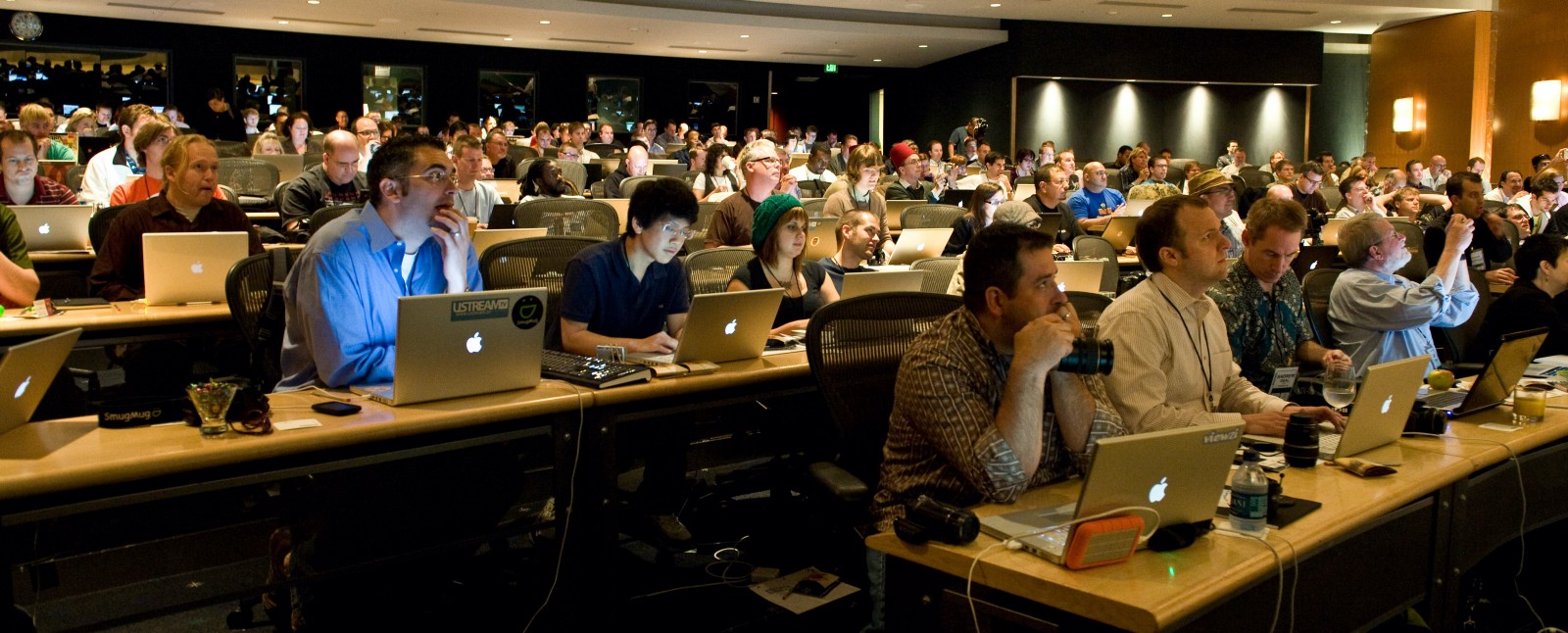

PLEASE NOTE: This is a draft of a bit of the Open Scientist Handbook. There are references/links to other parts of this work-in-progress that do not link here in this blog. Sorry. But you can also see what the Handbook will be offering soon.

The notion of using open digital badges to acknowledge certain practices and learning achievements has been circulating in the open science endeavor for more than a decade. Over these years, this has become a perennial “near future” augmentation/implementation of how open science can recognize and reward practices and skills. Instead of using game-able metrics that rank individuals as though they were in a race, badges can promote active learning, current standards, professional development, and research quality assurance.

The transition from arbitrarily scarce reputation markers (impact metrics, prizes, awards) to universally available recognition markers also helps to level the ground on which careers can be built across the global republic of science. Every scientist who wants to take the time and effort to earn a badge for achieving some level of, say, research-data reusability, or graduate-student mentorship, can then show off this badge to the world. Every student/scientist who acquires a specific skill (R programming, software reusability, statistics, etc.) can add a new badge to their CV.

In education, micro certifications can augment diplomas and degrees by pointing to specific skills acquired during the course of study. A badge can signal the attainment of a prerequisite skill for taking an advanced course, say, or a capstone skill for outside employment. These badges can accumulate into suites of acknowledged skills that students can highlight for specific future occupations. Micro-level open badges can be assembled into practical certifications (Leaser 2016; Accessed August 14, 2020).

“Open Badges are a specific type of digital badge designed to promote learner-agency principles. Open Badges communicate skills and achievements by providing visual symbols of accomplishments embedded with veriTable data and evidence that can be shared across the web. Open Badges empower individuals to take their learning with them — wherever they go — building a rich picture of their lifelong learning and achievements journey. Thousands of organizations across the world already issue Open Badges, from non-profits to major employers and educational institutions at all levels” <https://www.imsglobal.org/digitalcredentials>; Accessed August 14, 2020.

Digital badges are like virtual top hats: they signal achievement and belonging
Photo Credit: Sigismund von Dobschütz, October 16, 2011; CC BY-SA 3.0 on wikimedia commons

Above: German carpenters carry a book for certifications of their work while they apprentice on the road for three years to become members of the guild.

Keeping current with the latest badge news is difficult. Several projects are moving ahead independently (sounds like open science in general). Start-up credentialing companies, spin-offs from the open-badge endeavor, are building online commercial services, some of them on a blockchain, for verifiable credentials. Their not-so-open badges help companies run internal educational services and streamline hiring for specific skills (See: https://info.badgr.com/).

You can check out open/digital badge resources on the web:

Wikipedia: Digital Badges( <https://en.wikipedia.org/wiki/Digital_badge>; Accessed August 14, 2020),

MIT initially created an open standard for blockchain-connected certifications (<https://www.blockcerts.org/>; Accessed August 14, 2020),

Wikipedia: Mozilla Open Badges: (<https://en.wikipedia.org/wiki/Mozilla_Open_Badges>; Accessed August 14, 2020).

The Mozilla effort was moved to IMS global where a standard for open badges is (currently) maintained (<https://www.imsglobal.org/activity/digital-badges>; Accessed August 14, 2020).

Of course, badges are not new. Philipp Schmidt (2017; Accessed August 17, 2020) points out a long, global history of verifiable certifications. Boy and girl scouts have used badges for a century or more. Academic diplomas are badges of learning, as are driver’s licenses (in theory).

Publishing with open badges for open practices

Open Data badge on the COS Open Badges Blog

One place where badges might be implemented early is in open publishing, where publishers can add badges to their online descriptions of articles. These badges would serve to mark adherence to specific open practices: “Badges are an easy means of signaling and incentivizing desirable behaviors. Journals can offer badges acknowledging open practices to authors who are willing and able to meet criteria to earn the badge [(<https://osf.io/tvyxz/>; Accessed November 17, 2019)]. Badges acknowledging open practices signal that the journal values transparency, lets authors signal that they have met transparency standards for their research, and provides an immediate signal of accessible data, materials, or preregistration to readers. Badges allow adopting journals to take a low-risk policy change toward increased transparency. Compared, for example, to measures that require data deposition as a condition of publication, badge implementation is relatively resource-lite, badges are an incremental change in journal policy, and if badges are not valued by authors, they are ignored and business continues as usual” (Kidwell et al. 2016).

Photo Credit: Paul the Archivist on Wikimedia CC Attribution-Share Alike 4.0

Learned Societies as badge engines

Each learned society could also host badges that members can earn by sharing their research or offering services to the membership. This is an easy way to displace current journal-based reputation markers, while acknowledging quality work, and boosting membership value. Societies can reward members whose work exemplifies those norms the society determines as core to their mission. Research that demonstrates team effort, active diversity, rigorous data collection, reusability — any practice that amplifies the value of the work for the society — might be connected to a badge.

Unlike prizes, badges are open to all who meet the requirements; there are no losers here, except sloppy science. In the post-subscription business world, learned societies need to explore new value propositions. Badges are one way their communities can tap into their collective strengths to add real value to the lives of their members. At the same time, badges serve to recognize every member who qualifies; prizes can only recognize a selected few (See Also: Shaming the giant). How about this for a culture change practice: you acquire the right combination of badges and you automatically become a “fellow” of the society. You will have earned it; nobody needs to vote for you.

If your learned society is not planning to offer badges, you might want to inquire about this. They are missing a golden opportunity. There should be a badge for that.

Does your old/current organizational cultural path lead to nowhere? Blaze a new path with open badges.

Badges for culture building

Badges are not easy to administer. Like all recognition schemes, they need to be well crafted and constantly tended to assure validation and verification. Badges focus attention on the practices and skills they announce. The governance of badge systems requires — as it also acquires — an active, reflexive cultural capacity to build trust and buy-in. One upside here is that the work of supporting badges can also help an organization maintain its cultural norms over time. Badges help build communities. The conversations about badges can bring out the virtues and values of the group.

To change an organizational culture you first need to change the way things get done now. But how do you intercept current decision and work flows? How can you help the whole group unlearn toxic behaviors? Badges work to establish new paths for decisions and activities. They offer micro-rewards that nudge a community over to new practices. Badges can include learning requirements, exposing the whole community to relevant new information. Badges are implicit promises; hold and display the “Share Open Data” badge and you better keep sharing. Finally, earning a badge is a great occasion for a team mini-celebration. Even a skeptic with tenure can get a dose of good feelings when their team celebrates their recent achievement.

As badges celebrate cultural norms, they can help push toxic practices and other, external incentives into the margins. The badge system your academy organization creates can offer footholds up to the common goal of an open science destination; everybody can use the same badges to arrive at this shared future. There’s still a mountain to climb to get to “open”, only now there is plenty of room at the top, and a reliable path upward.

Doing science right becomes easier when all the internal rewards are lined up. Buying into badges means buying out of current toxic conflicts-of-interest in the research flow (See: Building a gift economy: the dance of open science culture). It might be that open badges are the “killer app” for the future of open science.

References:

Kidwell, M.C., L.B. Lazarević, E. Baranski, T.E. Hardwicke, and S. Piechowski. “Badges to Acknowledge Open Practices: A Simple, Low-Cost, Effective Method for Increasing Transparency.” PLOS Biology 14, no. 5 (2016): 1002456. https://doi.org/10.1371/journal.pbio.1002456.

Mozilla Foundation, The, and Peer 2 Peer University. “Open Badges for Lifelong Learning:Exploring an Open Badge Ecosystem to Support Skill Development and Lifelong Learning for Real Results Such as Jobs and Advancement” Working Paper, Funding from The MacArthur Foundation, 2012.

Steal like a(n Open) Scientist

Science is give and take

“After giving talks about open science I’ve sometimes been approached by skeptics who say, ‘Why would I help out my competitors by sharing ideas and data on these new websites? Isn’t that just inviting other people to steal my data, or to scoop me? Only someone naive could think this will ever be widespread.’ As things currently stand, there’s a lot of truth to this point of view. But it’s also important to understand its limits. What these skeptics forget is that they already freely share their ideas and discoveries, whenever they publish papers describing their own scientific work. They’re so stuck inside the citation-measurement-reward system for papers that they view it as a natural law, and forget that it’s socially constructed. It’s an agreement. And because it’s a social agreement, that agreement can be changed. All that’s needed for open science to succeed is for the sharing of scientific knowledge in new media to carry the same kind of cachet that papers do today” (Nielson 2011).

[T]he work of culture more generally may be seen as training towards letting (things) go. If culture is all about conveying things and skills to others…then learning to let go of things that others appropriately demand is a permanent process. Just as those from whom I have received skills and knowledge (and positions and objects and my life) had to let go of their possessions in the course of their lives, so will I have to learn to let go…” (Widlok 2016).

PLEASE NOTE: This is a draft of a bit of the Open Scientist Handbook. There are references/links to other parts of this work-in-progress that do not link here in this blog. Sorry. But you can also see what the Handbook will be offering soon. All comments are helpful!

In his book Steal like an Artist, Auston Kleon (2012) reminds artists that their lives have been surrounded by art, and that their “original” ideas have been informed in myriad ways by their exposure to this. Stealing is unavoidable, so do it right. Additionally, new art (including music) is always positioned inside of and/or away from the art preceding this. There is an abundance of influences to use, and a debt to all of them. Be bold and remix what you find, celebrate the old ideas in your new work. Don’t simply copy something and call it yours, but do study and learn from any source worth stealing. Investigate the meanings and potentials of what you find, and then transform these from those insights born of your personal onlyness (See: The Onlyness of the Career Open Scientist). Science is an art, with a similar relationship to its ideas. So your job is to learn how to steal like a scientist.

You are a scientist. You’re not agent 007. You are really more like agent C20H25N3O. But you do have a license. A license to steal. Come closer. Be honest. You are always on the lookout for ideas worth stealing. If the journal article you’re reading is not worth stealing, toss it away and keep looking. You are always looking. It’s called “research.” You hope your own team’s ideas are worth stealing. You make stealing these easy. It’s called “publication.” You are a professional thief. You keep careful track of the ideas you steal. You know where they are from. You’ve read the articles, you’ve read the articles they cited. You’ve read the articles from the citations in those articles. Life would be a lot easier if you could just spin up new ideas on your own. Science doesn’t work that way.

“We may consider sharing to be tolerated scrounging but for the scrounging to be tolerated it has to build on a number of recognized modes of action and interaction” (Widlok 2013).

“Saul Bellow, writing to a friend … said: ‘The name of the game is Give All. You are welcome to all my facts. You know them, I give them to you. If you have the strength to pick them up, take them with my blessing’” (Lethem 2007; Accessed July 20, 2020).

Stealing like a scientist in the open-science economy means you get to ask for and take what you need, in culturally specific ways. You take resources to use and reuse, to mine and remix. You pull knowledge from these, and add insights to them in the process. In hunter-gatherer societies (and sometimes in college dormitories), this is called “tolerated scrounging.” In the academy it’s more like “celebrated reuse.” Open-science research repositories make reuse quick and easy, and they are filled with ideas worth stealing. And, since these are “non-rivalrous” (See: Neylon 2016), an unlimited number of scientists can steal them. Better still, the more these ideas are stolen, the greater their value.

The culturally specific rules for stealing are being fashioned through the governance processes of scholarly commons (See: scholarly commons), as these are created to steward common pooled resources toward optimal use. The removal of patents for basic research (See: Hyde 2009; Barnett 2020), is one starting point. Fully public open-access publishing is another. Start somewhere and grow a culture of tolerated scrounging for the resources in your scholarly commons.

The responsibility is yours, the credit belongs to the whole scholarly club

[R]esearchers saw maintaining responsible conduct as the mandatory responsibility of every individual scientist. By choosing this card, the discussants assumed that science’s most important responsibility to society was to produce reliable knowledge. Research misconduct is then seen as the main threat to this practice…” (Sigl et al 2020).

When you gift (publish) a new scholarly work, you shoulder every responsibility for the rigor in your methods and any issues with your data. This is the first of several social responsibilities (such as mentoring others) you always carry, and one of the keystone virtues the academy has demanded for hundreds of years. Still, you are not the first nor the final author of your own findings. That authority is attached to a thousand places in the prior ideas of others, and in the work of more scientists yet to happen. You merely added one piece to an ongoing solution to the puzzle of nature (or society, etc.): to the “one long experiment” (Martin 1998) that is science. Time to get humble; but if intellectual humility doesn’t sound like you, you can claim hypo-egoic nonentitlement (Banker and Leary 2019) instead.

You own the event of discovery, not the piece of knowledge that was produced

Stealing like a scientist in an open gift economy also means everyone else gets to steal from you. When they steal like scientists, this makes you happy. It means your works are steal-worthy. You celebrate their reuse. In fact you need others to reuse your work to show its reproducibility. Your claim is that anyone would necessarily arrive at the very same insight you had, proving that this insight has a durable purchase on its object. If nobody can or does reuse your work, its value is unknown and even suspect.

What is harder to admit is the amount of luck, the confluence of good fortune that brought you to the event where you and your team acquired some new insight. Nobody gets to own serendipity. “Serendipity is a category used to describe discoveries that occur at the intersection of chance and wisdom” (Copeland 2019).

Riding on the back of the serendipity of reading what you did, talking with whom you have, and trying something new, you’ve exercised rigor and wonder and perseverance enough through your research to find that one distinct piece of the puzzle to apply it exactly where it fits. Now, you are expected to honor and celebrate the many contemporary and prior ideas that helped you and your team arrive at the singular event within which this new insight was born (See: Shaming the giant). By this, you also show that you belong to the elite club of science. And those who steal your ideas will honor and celebrate them in theirs.

Who can steal a gift? The expected answer is: nobody. The correct answer is: everyone.

As an open scientist, you have four jobs:

1.) produce ideas worth stealing, and;

2.) make these ideas as easy to steal as possible;

3.) steal as much from other scientists as you need, but steal like a scientist;

4.) become an active maintainer in your commons, to keep the stealing opportunities rich and rewarding for everyone.

As a member of a scholarly commons, you also have the duty to create normative cultural practices to optimize stealing going forward. Your list of “good stealing” practices will be fashioned to meet the needs of all the commoners in your community. Here’s a sample list:

Scientists know the difference

The Good Stealing practices involve care and attention to the provenance of what’s being stolen, and active credit for those who have made stealing possible. The Bad Stealing practices all point to a game of personal gain based on hiding the sources of your own learning. Good Stealing understands that stewarding the abundance of open resources is a long-term — longer than any lifetime — practice. Today, Bad Stealing practices — the hoarding, scooping, credit-grabbing kinds that are supported by the invented scarcity of ideas and the diminished value for generosity in science — flourish in the absence of social attention and alternative cultural norms. Tomorrow, when open science defines the norms for sharing, gifting, and celebrated reuse, Bad Stealing can be banished to the social margins, and ridiculed as needed.

Tolerated scrounging takes time and effort

On disinterestedness and serendipity: the freedom to discover and share in (open) science

“Disinterestedness: Scientists are motivated by the desire for knowledge and discovery, and not by the possibility of personal gain.
Self-Interestedness: Scientists compete with others in the same field for funding and recognition of their achievements” (Anderson, et al. 2007).

Let’s dig a little deeper into “celebrated reuse” and the history of science. The Mertonian norms of science include a notion of “disinterestedness.” At the time Merton was writing, this norm announced a basic freedom to pursue science without conflicts of interests, to shield basic science research from the motivations and (perverse) incentives that come with the marketplace, say, or with other external social/political/military desires. As Vannevar Bush (Accessed August 1, 2020) noted: “Scientific progress on a broad front results from the free play of free intellects, working on subjects of their own choice, in the manner dictated by their curiosity for exploration of the unknown.” Disinterestedness is also the culturally valued attitude of “letting go” when others build on your findings.

Disinterestedness was, and still is, the classic norm that frees you to let others in the academy club steal your work. The same lack of self interest that validates your independent research choice also validates you being able to let other people freely use your work. Disinterestedness is one of the social costs of academic freedom (you probably can’t have one without the other). It is the reason why the imbalance between responsibility (you have 100% of this) and authority (you have very little of this) makes perfect sense. You take the freedom to choose your research path in exchange for gifting the results back to the community; you release your personal interest in these results to benefit the whole scientific club.

If self-interest is your main incentive to do science, you are not doing open-science. Worse than that, you are doing science wrong. If you decide to wait until you have tenure to throw off self-interest (Anderson et al 2010), you are also doing it wrong. Certainly, we all have a stake in our own interests. Science expects us to care for these interests outside of our scientific explorations, and we need institutional reform and support to get there. But mainly, disinterestedness tells us to avoid conflicts with interests from outside the “republic of science” (Polanyi 1962).

Kindness and care still matter

“[M]uch of academic thinking brackets issues of emotions and values outside of academic understanding, even though emotions and values inhabit research and teaching by virtue of what we know, what we choose not to know, what we prioritise and what we trivialise” (Lynch and Ivancheva 2016).

Disinterestedness — that freedom to choose your own research subject and become passionate about exploring this — is not an alibi to ignore/resist other organizational cultural values for the academy, values that include kindness and care in academy workplaces and in relations with colleagues. (See: Kindness and care) You can start by bracketing out the perverse marketplace incentives that might warp your research path and diminish your own passion for the pursuit of science.

Passion is another part of science that is not peculiar to you. You are not the only person in the room or on your team that has been infected with the intellectual disease of science. This is a long-term global knowledge pandemic. Everyone gets to be infected — to be passionate — in their own way. (See: Six rules about passion). Exploring these passions through years of rigorous research effort builds a kind of shared practical wisdom inside the profession.

Applied practical wisdom: the practice of open science

The practical wisdom that underpins actually doing science removes the need for other incentives. The answer to the question: “How do you incentivize scientists to do research and teaching?” is simply this: “give them more opportunities to learn the practical wisdom required to do science” (See: The practical wisdom of science praxis).

Science requires/rewards its own unique practical wisdom. In addition to the practical wisdom one might (and perhaps should) acquire through social experiences with others (colleagues, family, strangers), doing science offers opportunities to acquire practical wisdom through a career experiencing nature as a complex emergent system.

For many years you learned from (and stole from) your teachers. Now, you encourage your students to scrounge new knowledge. Today, you steal like a scientist: information from your objects of study and insights from conversations with your colleagues. In tomorrow’s open-science culture, culturally-informed practices of Good Stealing will help you and your team and your organization optimize the use of the emergent scholarly commons infrastructure and content.

The work needed to articulate and support these practices will be significant. But know that the work needed to articulate and support Bad Stealing is/was just as arduous, except that so many academics have already learned how. Unlearning these toxic cultural practices will take time and reflection. Today, dozens of open-science platforms and communities are encouraging effective reuse. Reuse is one metric that deserves to become a goal (and one goal that makes a handy metric). How does your organization, your discipline, or your team celebrate active reuse? Where can it improve?

References

Anderson, Melissa S, Emily A. Ronning, Raymond De Vries, and Brian C. Martinson. “Extending the Mertonian Norms: Scientists’ Subscription to Norms of Research.” The Journal of Higher Education 81, no. 3 (2010): 366–93. https://doi.org/10.1353/jhe.0.0095.

Anderson, Melissa S., Brian C. Martinson, and Raymond De Vries. “Normative Dissonance in Science: Results from a National Survey of U.S. Scientists.” Journal of Empirical Research on Human Research Ethics 2, no. 4 (December 2007): 3–14. https://doi.org/10.1525/jer.2007.2.4.3.

Banker, Chloe C, and Mark R Leary. “Hypo-Egoic Nonentitlement as a Feature of Humility.” Personality and Social Psychology Bulletin, 2019, 0146167219875144.

Copeland, Samantha. “On Serendipity in Science: Discovery at the Intersection of Chance and Wisdom.” Synthese 196, no. 6 (June 2019): 2385–2406. https://doi.org/10.1007/s11229-017-1544-3.

Hyde, Lewis. The Gift: Creativity and the Artist in the Modern World. Vintage, 2009.

Kleon, Austin. Steal like an Artist: 10 Things Nobody Told You about Being Creative. New York: Workman Pub. Co, 2012.

Lynch, K, and M Ivancheva. “Academic Freedom and the Commercialisation of Universities: A Critical Ethical Analysis.” Ethics in Science and Environmental Politics 15, no. 1 (March 31, 2016): 71–85. https://doi.org/10.3354/esep00160.

Martin, Ronald E. One Long Experiment: Scale and Process in Earth History. Columbia University Press, 1998.

Nielsen, M. Reinventing Discovery: The New Era of Networked Science. Princeton University Press, 2011.

Polanyi, M. “The Republic of Science: Its Political and Economic Theory.” Minerva 1 (1962): 54–73.

Sigl, Lisa, Ulrike Felt, and Maximilian Fochler. “‘I Am Primarily Paid for Publishing…’: The Narrative Framing of Societal Responsibilities in Academic Life Science Research.” Science and Engineering Ethics 26, no. 3 (June 2020): 1569–93. https://doi.org/10.1007/s11948-020-00191-8.

Widlok, T. Anthropology and the Economy of Sharing. Routledge, 2016.

— — — . “Sharing: Allowing Others to Take What Is Valued.” HAU: Journal of Ethnographic Theory 3, no. 2 (2013): 11–31.

Time for the academy to retire the giants

The academy can’t afford a culture centered on creating giants in their fields

“If I have seen further it is by standing on the sholders [sic] of Giants.” Isaac Newton. 1676. Letter to Robert Hooke (before they became bitter enemies). This notion was a commonplace in the 17th Century, with the implications that even a dwarf would see further than a giant if he were standing on the giant’s shoulders. (Wikipedia).

“If our team’s ideas add value to the current state of knowledge, it is because we have stolen widely and well from the abundance of prior understanding surrounding us, and climbed a stairway of knowledge built by others.” Modern version… no giants.

PLEASE NOTE: This is a draft of a bit of the Open Scientist Handbook. There are references/links to other parts of this work-in-progress that do not link here in this blog. Sorry. But you can also see what the Handbook will be offering soon.

Open science needs to admit that no scientist is a lone giant in their field

One of the hard lessons for open science is to abandon the notion that “great” scientists — those “giants” of the academy — were and are individuals of some unique and rare quality; that their shoulders tower above those of their peers, and that the optimal career goal of a scientist is to become a giant in their field. And, if you are a woman in science, while standing on the shoulders of “giants” in the academy, you can be fairly certain that some of them would have been intent on looking up your skirt; another reason why open science needs Fierce Equality.

In Isaac Newton, the Asshole who Reinvented the Universe (Freistetter 2018) we get a picture of Newton’s brilliance as a natural philosopher, and of his serial acts of intellectual and careerist selfishness. Biographies of Newton’s career and personality issues are several (See also: Clark and Clark 2001; Manuel 1979; Gleick 2004). The biographies of several of his contemporaries (Leibniz, Hooke, Gray, and Flamsteed for starters) reveal their side of the dangers of being on Newton’s wrong side. But then Newton’s bad behavior was not as unusual as it perhaps should have been. Rather, it was distinguished by its obsessive persistence, and made potent by Newton’s position at the head of the Royal Society. Freistetter excused much of Newton’s bad behavior as emblematic of an academy culture where intellection was — and still is — a cerebral variety of blood sport. He did venture that Newton would still be called an asshole if he were working today.

Newton’s interpersonal misconduct is less of an issue here. For more on assholes, take a look at The Need for a Zero-Asshole Zone. While producing a series of astonishing research findings from his own work, Newton was soaking up ideas and credit from others, while insisting that his ideas were his alone. Apparently, we wasn’t entirely serious about the whole “giants’ shoulders” thing.

You want to get good at doing science — as a personal goal — because this leads to more satisfaction in your daily life and career, and because you can become more valuable to science by having better conversations that lead to more interesting questions and new ideas. Your getting better at being a scientist should, in no manner obstruct others on their path to getting better at this. In fact, one of the advantages of open work in science is that you can lift others during your climb up the same stairs. You can always grow. You can grow a larger sense of the science you are working with/on, a perception of how your work fits into the field, and appreciation for the work of your colleagues. Your primary challenge is to be better at science (and being human) today than you were yesterday.

A lot of scientists worked to build the stairs you are climbing

“[B]y some measure, every important innovation is fundamentally a network affair” (Johnson 2011).

“[M]odern scholarship is based on cooperation. Ideas are not created in a vacuum. Reuse of research processes, methods and results as well as abstraction and extension should therefore represent basic values of scholarly communication. The possibility to reuse data, materials and results enables researchers and communities to learn from each other and to speed up the production of new knowledge” (Vienna Principles 2016; Accessed July 10, 2020).

There’s a badge for that

What’s wrong with having and celebrating “giants” in your field? We can explore this. Firstly, the goal of exclusive achievement and individual fame requires and produces way too much scarcity in the process (Against Exclusion: open is open to all). In the game of “giant-making,” recognition points might need to be hoarded, reputation metrics jealously guarded, and ideas (and data) locked away until some strategic moment. Secondly, the practice of acknowledging a science giant requires the production of science dwarves. It’s a zero-sum game. If nobody’s small, someone can’t be giant. Most giants only look large from far away because of the cumulative advantages they were given across their careers. They are actually standing on the shoulders of privilege. Finally, the desire to be a giant fuels narcissistic behavior, of which the academy has an abundance already.

“As Justice Louis Brandeis, who witnessed our previous Gilded Age, might have said: ‘We may have democracy, or we may have praise showered on the heads of a few, but we can’t have both’” (Johnson 2019: Accessed July 24, 2020)

In a fiercely-equal, open-science culture, zero-sum games of prizes and awards handed out to would-be giants can be replaced in favor of a larger emphasis on a system of open badges that anyone can earn: with intention, time, and effort (An Introduction to Badges). The use of badges earned instead of prizes won for recognition of accomplishments would build a reputation economy for the academy that rewards achievement anywhere on the planet, and refocusses attention on science’s generative engine: learning and community effort. “Although the edifice of scientific understanding is sometimes envisaged as an accumulation of individual discoveries, in reality science is a community effort comprising innumerable interdependent contributions. Credit is disproportionately awarded to principal investigators for what is truly the product of teamwork, and nearly all scientific contributions are heavily dependent on knowledge obtained earlier…. In the spirit of an Amish barn-raising, a celebration of the collective achievement of science should subsume individual achievement” (Casadevall and Fang 2012 [ASM]).

The finite game (Open Science and the Infinite Game) of “making a name for oneself” in the academy is far too expensive to the academy to allow this to be a central goal of science. Science demands so much already from you: both rigor and wonder, and in generous amounts. “Science is an inherent contradiction — systematic wonder — applied to the natural world” (Lewis et al. 2001).

Because it is important to regularly celebrate open science cultural practices, and contributions to science, and to institutions, and teams, you can create honors that are playful and honest (Celebrate Open Science). Science doesn’t need fellows in national academies as much as it needs researchers who deserve to get honored for their dedication and their kindness. Be generous to those who are, too. Don’t tell your team members to “leave their frowns at home,” but hand out medals (perhaps made of chocolate) to those with the most difficulties to overcome, and the best spirit. Give away prizes every week. Cheer when someone earns a difficult badge. Turn learned society elections into lotteries, and celebrate when volunteer leaders chosen at random step up and perform. Find ways to reward as many early career colleagues as possible. In the end, you realize that everyone who makes a serious attempt to do science is already a giant. You didn’t notice because you are one too.

Marc McGinnes taught for decades at UCSB. On civic holidays, he would walk on stilts as an “occasional giant.” He is a giant in many ways.

Afterthoughts: If you still want to be a giant, be a giant for your family, be a giant in your town. Perhaps there used to be giants, back when the only way to fund science was to attract the attention and the purse of a king. If the person paying your rent is named de’ Medici, perhaps you should get used to wearing stilts, just ask Galileo Galilei. The main lesson of that famous “standing on the sholders of giants” quote is that if you are going to be a life-long jerk, pop some really nice sentiments on your blog that people might remember you by three hundred years later. Even then, someone will write a book about what an asshole you were.

References

Casadevall, Arturo, and Ferric C Fang. Reforming Science: Methodological and Cultural Reforms. Am Soc Microbiol, 2012.

Clark, David H., and Stephen P. H. Clark. Newton’s Tyranny: The Suppressed Scientific Discoveries of Stephen Gray and John Flamsteed. New York: W.H. Freeman and Co, 2001.

Freistetter, F. Isaac Newton: The Asshole Who Reinvented the Universe. First American hardcover edition in English. Amherst, New York: Prometheus Books, 2018.

Gleick, James. Isaac Newton. New York; Westminster: Vintage Imprint ; Knopf Doubleday Publishing Group ; Random House, Incorporated Distributor, 2004. http://site.ebrary.com/id/10063736.

Johnson, S. Where Good Ideas Come from: The Seven Patterns of Innovation. Penguin UK, 2011.

Lewis, Thomas, Fari Amini, and Richard Lannon. A General Theory of Love. 1. Vintage ed. New York: Vintage, 2001.

Manuel, Frank Edward. A Portrait of Isaac Newton. Washington: New Republic Books, 1979.